
Recurrent Bell’s palsy refers to facial muscle weakness that occurs on multiple occasions. For instance, a patient can experience Bell’s palsy symptoms that last for a few weeks or months. The symptoms can subside on their own. Or, the patient can undergo treatment to alleviate their symptoms. Yet, if the symptoms reappear at a later date, the patient may be dealing with recurring Bell’s palsy.
How Common Is Recurring Bell’s Palsy?
Some researchers estimate recurrent Bell’s palsy occurs in about 8% of cases. Comparatively, a study of 185 Bell’s palsy patients between the ages of 4 and 70 revealed 12% of participants experienced recurrent partial or complete facial paralysis. This study also indicated recurrent Bell’s palsy is more likely in the first two years after the condition’s onset. Another study showed recurring Bell’s palsy affected more than 15% of patients, some of whom experienced the condition alongside diabetes and hypertension.
According to a StatPearls review on Bell palsy, the recurrence rate is estimated at 8% to 12%, with a mean latency of approximately 10 years between episodes. In cases of multiple recurrences, researchers suggest that narrowed facial nerve canals may worsen vascular stress during inflammation, making repeated episodes more likely.
Regardless of whether Bell’s palsy is a one-time or recurrent issue, the condition must be diagnosed and treated properly. That way, a Bell’s palsy patient can limit the risk of long-lasting facial paralysis.
Why Does Bell’s Palsy Reoccur?
Researchers continue to investigate recurrent Bell’s palsy and why it occurs. To date, researchers have studied whether diabetes, hypertension, and pregnancy can increase the risk of multiple occurrences. Also, they have evaluated the potential impact of schwannomas (nervous system tumors), genetics, chromosomal mutations, and fibrous dysplasia on recurring Bell’s palsy. However, it remains unknown if any of the aforementioned issues can directly cause recurrent Bell’s palsy.
Questions persist about the exact cause of non-recurrent Bell’s palsy as well. Thus far, research shows Bell’s palsy can occur when herpes simplex virus (HSV) gets reactivated in the temporal bone, which contains the middle and inner parts of the ear. In this instance, the facial nerve becomes swollen, often leading to sudden facial paralysis and other symptoms.
Patients with more than two recurrent episodes, especially without clear risk factors, may benefit from further evaluation. Imaging and lab work can help rule out underlying causes such as facial nerve schwannomas or autoimmune conditions like Melkersson-Rosenthal syndrome, which can present similarly to repeated Bell’s palsy.
Recurrent Bell’s Palsy Symptoms
Recurrent Bell’s palsy can cause a wide range of symptoms, including:
- Numbness or pain behind the ear
- Sudden facial paralysis on one side of the face
- Inability to blink or close the eyelid
- Drooling
- Difficulty chewing
- Facial muscle twitching
- Reduced sense of taste
Some patients also report a metallic taste on the affected side, ipsilateral ear discomfort, or increased sensitivity to sound. These additional signs reflect involvement of nearby nerve branches and are worth noting when describing symptoms to a physician.
The severity of recurring Bell’s palsy symptoms ranges from mild to severe. If left uncorrected, these symptoms can become permanent.
Recurrent Bell’s Palsy Diagnosis
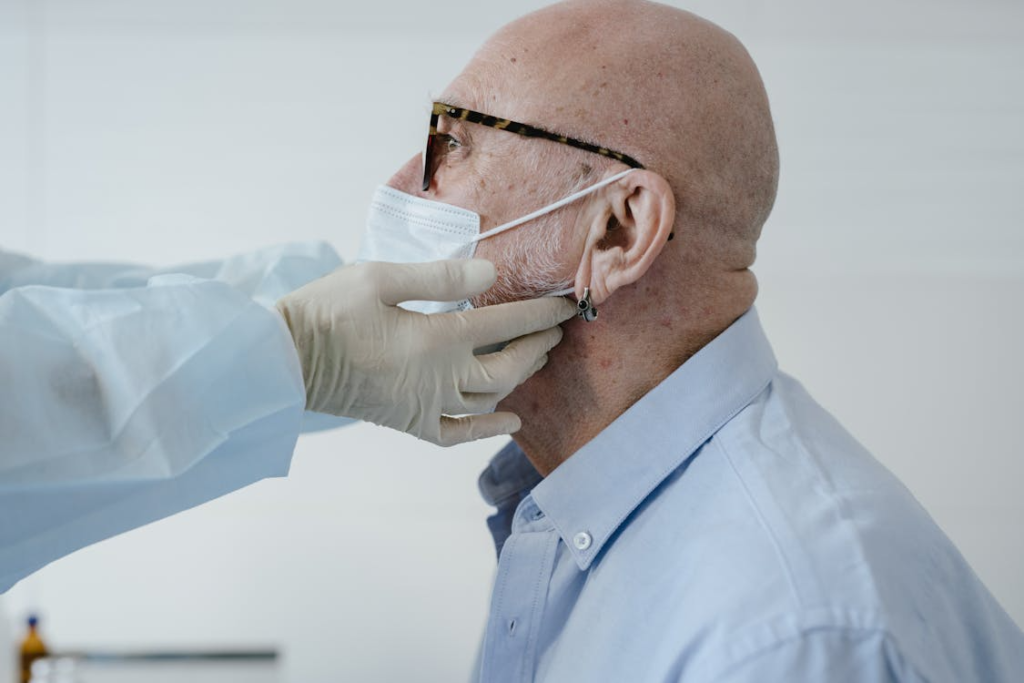
If recurring Bell’s palsy symptoms appear, go to an emergency room. At this point, a doctor can evaluate their patient and perform tests to determine if he or she is dealing with Bell’s palsy.
A doctor may use one or more of the following tests to diagnose Bell’s palsy:
- Lab test for Lyme disease
- Thyroid function test
- HIV and hepatitis test
- Neurologic and ear, nose and throat (ENT) evaluation
In addition, a doctor may perform a tearing function evaluation, a computed tomography (CT) scan, and magnetic resonance imaging (MRI) exam. These tests are used to identify the root cause of a patient’s facial paralysis.
A doctor can also perform an electromyography (EMG) or electroneurography (ENoG) to diagnose Bell’s palsy. These tests are usually administered to Bell’s palsy patients who are dealing with severe cases of facial paralysis.
Ultimately, a doctor requires as much medical information as possible from their patient to provide an accurate diagnosis. So, it is paramount for a patient to tell their doctor if they previously experienced Bell’s palsy. The doctor can then review the patient’s medical history and conduct additional testing as needed.
Patients presenting with repeated episodes of facial paralysis may also be assessed using the House-Brackmann Facial Nerve Grading System, a widely used scale that helps clinicians measure the severity of facial nerve dysfunction and track changes over time.
Does Recurring Bell’s Palsy Require Medical Treatment?
When Bell’s palsy symptoms appear, seeking medical care right away is the safest and most effective approach. By meeting with a doctor, a patient can receive expert support to address their Bell’s palsy symptoms. A doctor can help a patient determine a safe and effective way to treat these symptoms and minimize the risk of recurrence as well.
In most cases, Bell’s palsy symptoms disappear on their own within about six to nine months of the condition’s onset. To treat these symptoms, a doctor may prescribe corticosteroids or antiviral medications. A doctor may also recommend physical therapy, so their patient can learn exercises to strengthen and improve the coordination of their facial muscles. There may be times when a patient is a good candidate for Botox injections, which can temporarily correct facial paralysis caused by Bell’s palsy.
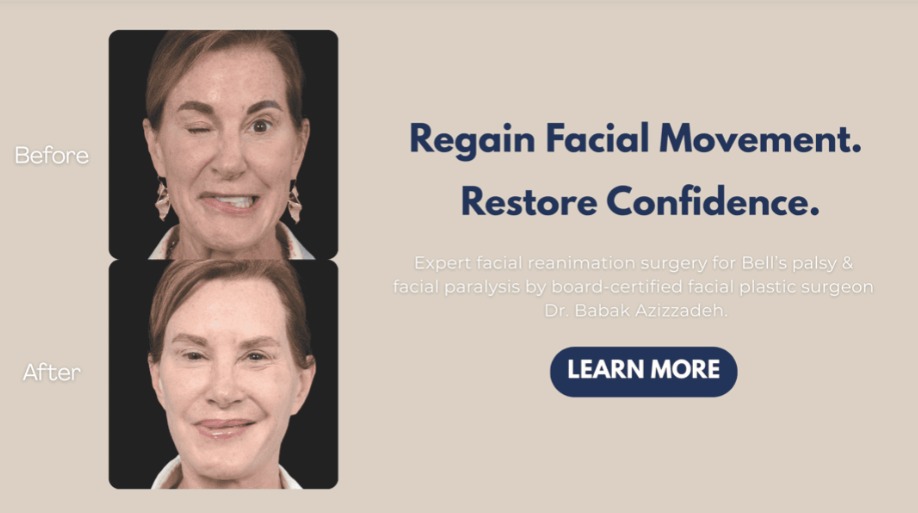
If Bell’s palsy symptoms persist for eight months or longer or recur, a treatment consultation with Dr. Babak Azizzadeh of The Facial Paralysis Institute can be beneficial. At this point, Dr. Azizzadeh can evaluate a patient and find out if he or she qualifies for surgery.
If you have already been through Bell’s palsy once and are now noticing familiar symptoms returning, do not wait. Early intervention is associated with better outcomes, and prompt evaluation by a specialist can help you avoid long-term complications such as synkinesis.
Experiencing recurring facial weakness? Schedule a consultation with Dr. Azizzadeh to discuss your options. Contact us or call (310) 657-2203.
How Does Dr. Azizzadeh Treat Recurrent Bell’s Palsy?
Recurrent Bell’s palsy treatment varies based on the patient and the severity of their symptoms. Dr. Azizzadeh takes a holistic approach to treat his patients’ Bell’s palsy symptoms. He understands each Bell’s palsy case is unique and dedicates the necessary time and resources to learn about his patient and provide a custom treatment plan.
Initially, a Bell’s palsy patient may receive high-dose steroids (prednisone) and antiviral medications (Famvir or Valtrex). If a patient previously used these or other medications to treat Bell’s palsy in the past, he or she may benefit from them once again. Recurring Bell’s palsy may also be treated with physical therapy and Botox. In certain instances, a combination of medications, physical therapy, and/or Botox can help Bell’s palsy patients address their symptoms as well.
If a patient experiences recurring Bell’s palsy symptoms over an extended period of time, Dr. Azizzadeh may recommend surgery. He offers two surgery options to Bell’s palsy patients: a selective neurolysis procedure and a “supercharging” or “signal upgrading” surgery.
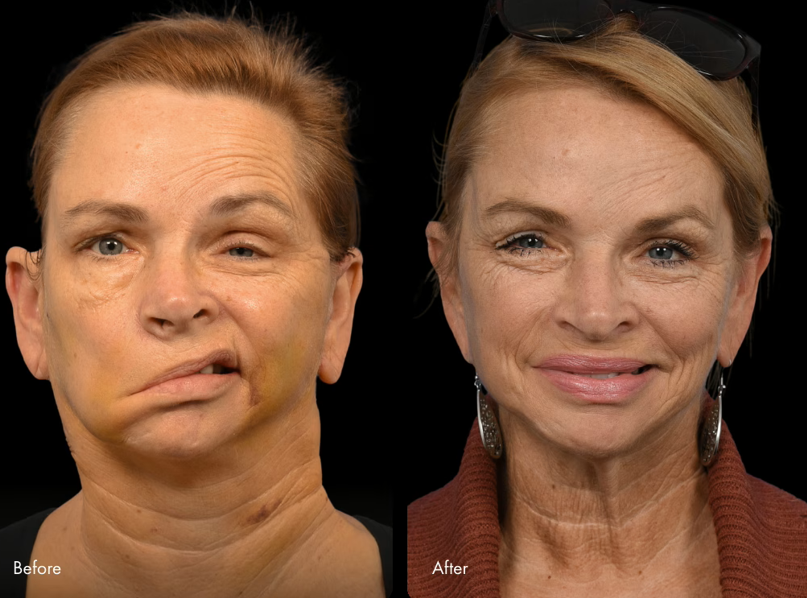
Dr. Azizzadeh performs selective neurolysis to help patients permanently correct facial paralysis associated with recurring Bell’s palsy. During the procedure, Dr. Azizzadeh uses an intraoperative EMG to map out his patient’s facial nerves. Dr. Azizzadeh then decreases the activity of the facial nerves that otherwise prevent his patient from smiling. Next, Dr. Azizzadeh releases the platysma muscle that pulls the corner of a patient’s mouth down. This results in spontaneous reanimation of a patient’s face and enables him or her to produce a natural-looking smile.
Meanwhile, Dr. Azizzadeh offers a supercharging procedure that can boost the power of a patient’s facial nerve. At the same time, the procedure can strengthen weak smile muscles and preserve their basic function.
What Is the Best Treatment for Recurring Bell’s Palsy?
The best treatment for recurring Bell’s palsy depends on the patient. Dr. Azizzadeh tailors a recurrent Bell’s palsy treatment plan to each individual. He learns about the patient’s symptoms and when they previously experienced Bell’s palsy. Dr. Azizzadeh also reviews the patient’s medical history, so he can provide treatment that won’t compromise their overall health.
Furthermore, Dr. Azizzadeh monitors his patient’s progress over the course of a treatment. He wants his patients to achieve long-term results. Therefore, he requests follow-up appointments with his patients to assess the effectiveness of recurring Bell’s palsy treatments.
For patients who have experienced repeated episodes, Dr. Azizzadeh also evaluates whether structural or neurological factors may be contributing to the pattern. This thorough approach helps ensure that treatment addresses not just the current episode, but the underlying conditions that may be driving recurrence.
Bell’s Palsy Recurrence Prevention
No one is immune to Bell’s palsy. Thus, there is no solution to stop Bell’s palsy or prevent it from recurring.
Conversely, people who experience Bell’s palsy symptoms once or several times should seek out medical treatment right away. These symptoms can impact a person’s overall health for many years after onset. But, with immediate diagnosis and treatment, an individual can prevent Bell’s palsy symptoms from becoming long-term issues.
While recurrence cannot always be prevented, managing known risk factors, such as keeping blood glucose controlled in patients with diabetes, supporting immune health, and following through on prescribed treatment, may help reduce the likelihood of another episode. Staying consistent with Bell’s palsy facial exercises after recovery may also support better long-term facial nerve function.
Have Bell’s palsy symptoms returned after a previous episode? Dr. Azizzadeh offers in-person consultations in Beverly Hills and virtual consultations for patients who cannot travel. Reach us at contact us or call (310) 657-2203.”]
Dealing with Recurrent Bell’s Palsy? Schedule a Consultation with Dr. Azizzadeh
There is no need to let Bell’s palsy symptoms become recurring problems. By meeting with Dr. Azizzadeh, a patient can get insights into recurring Bell’s palsy and receive an in-depth evaluation. He or she can also explore treatment options to alleviate their symptoms now and in the future.
Dr. Azizzadeh is happy to evaluate patients who have been coping with Bell’s palsy symptoms for eight months or longer. He offers in-person consultations in Beverly Hills and virtual consultations via Zoom to patients who are experiencing these symptoms for the first time or have previously dealt with them. For more information or to request a consultation with Dr. Azizzadeh, contact us online or call us today at (310) 657-2203.
Frequently Asked Questions About Recurrent Bell’s Palsy
Can Bell’s palsy come back after you have fully recovered? Yes. Bell’s palsy can recur even after a full recovery. Research suggests this happens in approximately 8% to 12% of patients, sometimes years after the first episode. If you notice familiar symptoms returning, seek medical attention promptly.
Is recurrent Bell’s palsy more serious than a first episode? Repeated episodes can carry a higher risk of incomplete recovery and long-term facial nerve complications, including synkinesis. Each recurrence should be evaluated and treated by a specialist, not assumed to follow the same course as the first.
What causes Bell’s palsy to keep coming back? The exact cause of recurrence is not fully understood. Possible contributing factors include reactivation of herpes simplex virus, underlying health conditions such as diabetes or hypertension, narrowed facial nerve canals, and in rarer cases, autoimmune conditions like Melkersson-Rosenthal syndrome.
When should I see a specialist for recurrent Bell’s palsy? If you have had more than one episode of Bell’s palsy, or if your current symptoms have not improved after several months, a consultation with a facial nerve specialist like Dr. Azizzadeh is strongly recommended. Early evaluation allows for a more targeted treatment plan and better outcomes.
What treatments are available for recurrent Bell’s palsy? Treatment options depend on the severity and frequency of recurrence. They may include corticosteroids, antiviral medications, physical therapy, Botox injections, or surgical procedures such as selective neurolysis. Dr. Azizzadeh evaluates each patient individually and develops a plan based on their specific history and needs.Can recurrent Bell’s palsy lead to permanent facial paralysis? Without timely treatment, repeated episodes can increase the risk of long-term facial paralysis or synkinesis. Seeking care early at each recurrence is the best way to protect long-term facial nerve function.
Request your consultation with Dr. Azizzadeh today
Call us at (310) 657-2203 to schedule an appointment.
Schedule a Consultation