When Bell’s palsy develops, facial drooping tends to get the most attention. But the eye on the affected side is often the part that needs the most urgent care. The facial nerve controls the muscles responsible for closing the eyelid, so when that nerve is disrupted, the eye can remain partially or fully open, even during sleep. Left unaddressed, that exposure can cause real, lasting damage to the cornea.
Key Takeaways
- Bell’s palsy disrupts the facial nerve, which controls eyelid closure, leaving the eye exposed and at risk for dryness and injury.
- The most common eye complications include dry eye syndrome, excessive tearing, corneal abrasion, and light sensitivity.
- Most Bell’s palsy cases resolve within three to six months, though some patients experience lasting nerve damage and eyelid dysfunction.
- Conservative care includes lubricating drops, nighttime ointment, moisture chambers, and protective eyewear.
- Patients with permanent eyelid dysfunction may benefit from surgical options, including eyelid weight implantation or facial reanimation procedures.
Why Bell’s Palsy Affects the Eye
The seventh cranial nerve, commonly called the facial nerve, controls the orbicularis oculi muscle, which is responsible for closing the eyelid. When Bell’s Palsy disrupts this nerve, the eyelid may no longer close fully, a condition known as lagophthalmos. This can happen while blinking, sleeping, or simply trying to rest the eyes.
Without full eyelid closure, the cornea doesn’t get the consistent moisture it needs. Tear distribution becomes uneven, and the eye’s surface dries out faster than it can recover. That dryness sets off a cycle of irritation and inflammation, and in more serious cases, it can lead to infection or permanent scarring.
Common Eye Complications
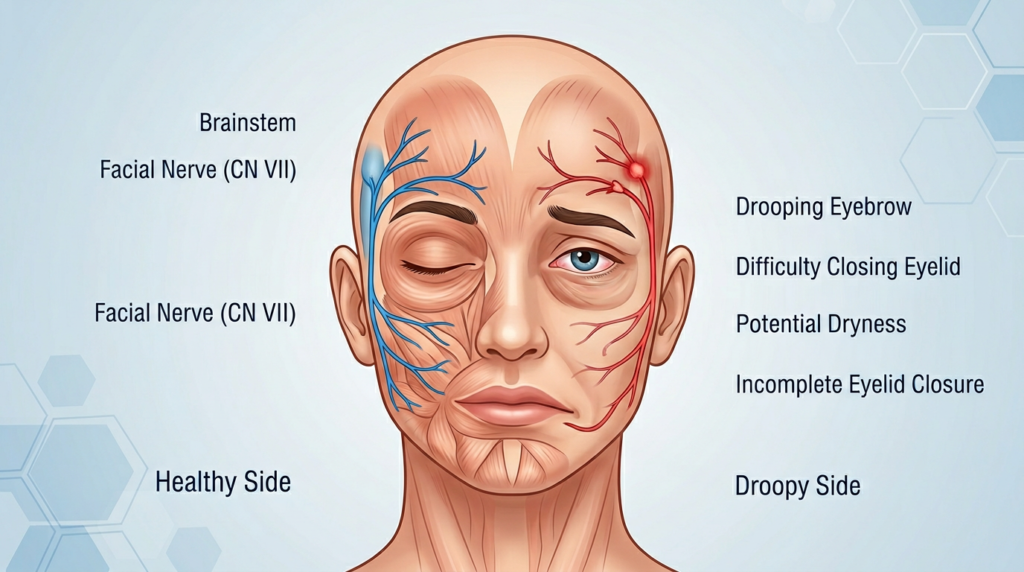
Not every patient experiences the same degree of eye involvement. For some, symptoms are mild, like occasional dryness or sensitivity to bright light. For others, the complications are harder to ignore. The issues that come up most frequently include the following.
- Dry eye syndrome, caused by reduced blinking and uneven tear coverage across the corneal surface
- Excessive tearing, a reflex response when the eye overproduces tears to compensate for dryness
- Corneal exposure, which develops when the eye’s surface stays unprotected for extended periods due to incomplete lid closure
- Corneal abrasion or ulceration, the more serious result of prolonged exposure that goes unmanaged
- Light sensitivity and blurred vision, especially when the cornea has become inflamed or scratched
https://facialparalysisinstitute.com/conditions/bells-palsy
How Long Do Bell’s Palsy Eye Complications Last?
Timeline is one of the most important factors in how this plays out. Most patients start improving within two to four weeks, and full recovery from Bell’s Palsy typically occurs within three to six months. As the nerve heals, eyelid function usually returns alongside it, and the eye complications ease up on their own.
That said, research suggests 15 to 30 percent of patients experience incomplete recovery. In those cases, eyelid weakness can persist well past the six-month mark, and some degree of dysfunction may become permanent. Eye protection in facial paralysis is especially critical during this phase, particularly at night when the eye is most at risk of drying out or developing corneal damage.
The longer the cornea goes without adequate coverage, the higher the chance of long-term complications. This is why consistent eye care matters even when recovery appears to be progressing, not just when things feel urgent.
Managing Eye Complications from Bell’s Palsy
For most patients in the early stages, management is conservative and manageable at home. The goal is to keep the eye moist, protected, and free of infection while the nerve recovers. A consistent daily routine prevents most complications before they start.
- Apply lubricating eye drops throughout the day, especially in dry, screen-heavy, or air-conditioned environments.
- Use a thicker gel or ointment at bedtime to maintain moisture through the night.
- Tape the eyelid shut or wear a moisture chamber while sleeping to prevent overnight corneal exposure.
- Wear protective eyewear outdoors to reduce wind exposure and shield against light sensitivity.
- Avoid touching or rubbing the eye to reduce the risk of introducing bacteria or worsening irritation.
Depending on how significantly the eyelid is affected, a doctor may recommend Bell’s Palsy Eye Treatment Options such as prescription-strength lubricants or temporary eye patching to provide more structured protection during recovery.
https://facialparalysisinstitute.com/treatments/gold-eyelid-weights
Solutions for Permanent Bell’s Palsy
When the facial nerve doesn’t fully recover, the eye complications don’t resolve on their own either. Permanent eyelid dysfunction needs a more deliberate plan, one that goes beyond drops and patching to address the structural cause of the problem.
Surgery
For patients with lasting eyelid weakness, surgery is often the most reliable long-term solution. One of the most established options is the implantation of Gold Eyelid Weights, small weights placed inside the upper eyelid that use gravity to help the eye close more completely. The procedure is minimally invasive, well-tolerated, and can produce significant improvement in both daily comfort and corneal protection.
Additional surgical options may include lower eyelid tightening to improve overall closure, brow lift procedures to address upper visual field obstruction, and facial reanimation surgery for patients who need broader nerve repair and restored movement.
The Facial Paralysis Institute, located in Beverly Hills, California, offers a comprehensive range of surgical treatments for patients dealing with facial nerve disorders and long-term eyelid dysfunction. Dr. Babak Azizzadeh, the institute’s lead surgeon, brings decades of specialized expertise in facial nerve repair and reanimation. He evaluates each patient individually to identify the combination of treatments that will best restore eye function and quality of life.
If you’re managing eye complications from Bell’s palsy and want to understand all of your options, schedule a consultation with the Facial Paralysis Institute to take the next step toward protecting your vision.
Bell’s palsy eye complications are manageable at every stage, whether you’re in the early weeks of an acute episode or navigating the longer-term effects of permanent nerve damage. Consistent, expert-guided care makes the difference between minor discomfort and serious corneal injury. With the right support, most patients can protect their eye health and avoid lasting damage.
Frequently Asked Questions
Can Bell’s palsy cause permanent eye damage?
Yes, if left unmanaged, prolonged corneal exposure can lead to lasting damage including scarring or vision loss. The good news is that most complications are preventable with consistent eye care and timely treatment.
How do I know if my eyelid isn’t closing fully?
Common signs include persistent dryness or a gritty sensation, waking up with a red or irritated eye, noticing that the eye doesn’t fully shut when you blink, or experiencing blurred vision in the morning.
Are lubricating drops enough to manage Bell’s palsy eye care?
In mild to moderate cases, lubricating drops and ointments are often sufficient during recovery. More severe or prolonged cases may require additional measures, including patching, taping, or surgical treatment.
What is a gold eyelid weight?
A gold eyelid weight is a small implant placed inside the upper eyelid. It uses the natural pull of gravity to assist with eyelid closure in patients whose facial nerve no longer fully controls that movement.
When should I see a specialist for Bell’s palsy eye complications?
If you’re experiencing persistent dryness, pain, redness, or difficulty closing your eye, see a specialist sooner rather than later, especially if symptoms aren’t improving within the first few weeks of onset.
Request your consultation with Dr. Azizzadeh today
Call us at (310) 657-2203 to schedule an appointment.
Schedule a Consultation