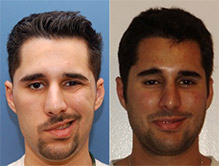
Facial paralysis affects far more than appearance. It changes how a person communicates, connects, and expresses emotion. For patients with one-sided paralysis, the real goal of treatment is the return of spontaneous, natural movement. Cross facial nerve grafting is a microsurgical procedure that makes this possible by rerouting nerve signals from the healthy side of the face to reawaken the paralyzed side.
Key Takeaways
- Cross facial nerve grafting redirects nerve signals from the healthy side of the face to restore spontaneous movement on the paralyzed side.
- The procedure is most effective when performed within two years of paralysis onset.
- A sural nerve harvested from the lower leg is the standard donor graft used to bridge across the face.
- CFNG is often the first stage of a two-step plan, frequently followed by a gracilis muscle transplant.
- Full nerve regeneration can take 12 to 18 months or longer before results become visible.
What Is Cross Facial Nerve Grafting?
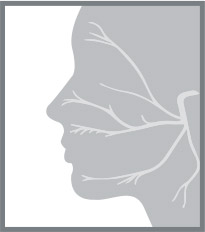
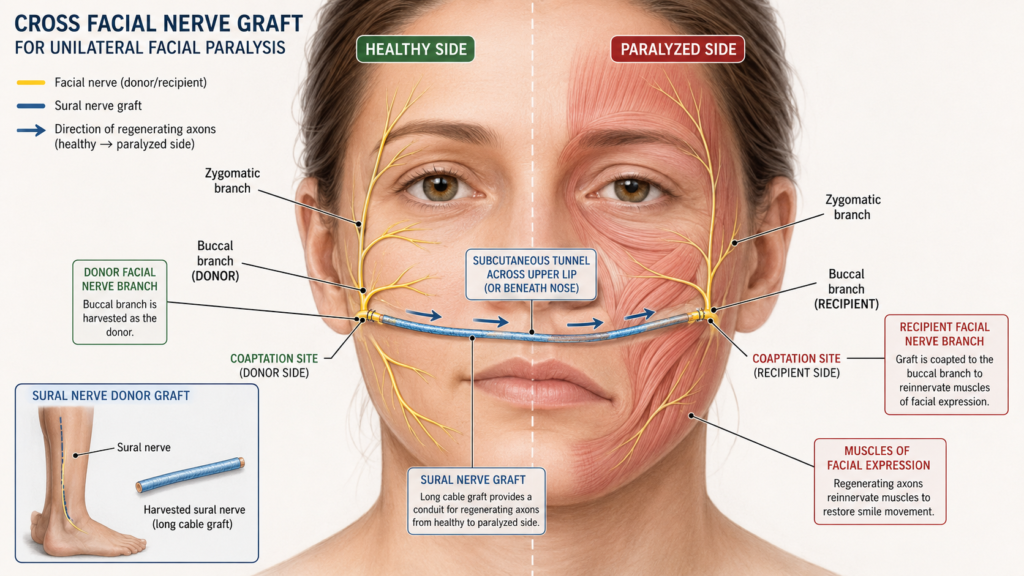
This procedure redirects expendable branches from the functioning facial nerve on the healthy side of the face, connecting them via a donor nerve graft to the paralyzed side. The graft acts as a bridge for nerve regeneration, recreating the brain’s original signaling route.
Because the source is still the facial nerve, the resulting expressions are emotionally driven. This is what sets CFNG apart from techniques that borrow motor input from the masseter or hypoglossal nerve, which require conscious muscle activation.
Facial Nerve Transplant Surgery
Who Is a Good Candidate?
Patient selection directly shapes outcomes. The procedure works best for patients with unilateral facial paralysis whose affected muscles are still viable, ideally treated within two years of onset before fibrosis reduces reinnervation potential.
Patients who lost facial function due to tumor removal, trauma, or acoustic neuroma are frequently evaluated for this approach. Children with congenital facial paralysis, including Moebius syndrome or hemifacial microsomia, may also qualify. Each case is assessed individually based on anatomy, age, health, and treatment goals.
Patients exploring options for nerve reconstruction are welcome to schedule a personalized consultation at the Facial Paralysis Institute to determine whether this procedure fits their situation.
The Surgical Technique
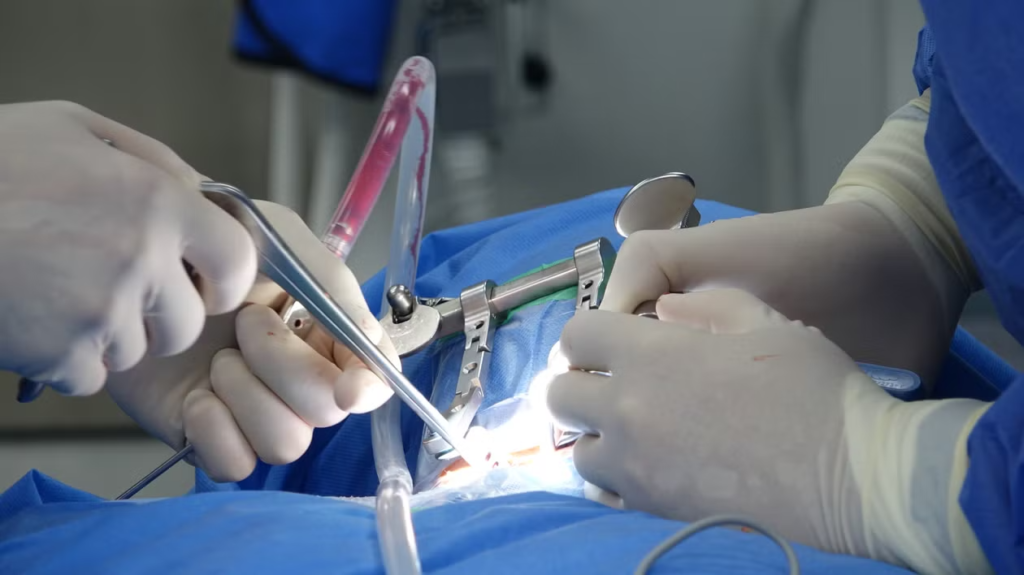
Performed under general anesthesia over three to five hours, the surgery begins with intraoperative nerve monitoring to map and identify expendable branches on the healthy side of the face. Once selected, the surgeon performs a sural nerve harvest from the lower leg.
The sural nerve is sensory only, so its removal typically causes just a small temporary area of numbness on the outer foot. The harvested graft is then tunneled across the upper lip and connected to target nerve branches on the paralyzed side using microsurgical sutures under magnification.
For many patients, this is a staged procedure. As the graft regenerates over several months, it primes the paralyzed side for a second surgery, often a gracilis muscle transplant where muscle from the inner thigh is transferred to the face and powered by the new nerve supply.
Recovery and Expected Outcomes
Nerve regeneration advances at roughly one millimeter per day, which means patients typically wait 12 to 18 months before seeing meaningful results. In the first weeks after surgery, the focus is wound care, limiting facial movement, and attending regular follow-up visits.
As months pass, early signs of nerve activity such as subtle twitching may emerge. Final outcomes depend on the degree of nerve damage, patient age, and whether the graft is combined with reanimation surgery as a second stage.
The Role of Surgical Expertise
This is technically demanding surgery. The ability to select appropriate donor branches, execute precise coaptations, and plan a multi-stage reconstruction shapes the final result more than almost any other factor.
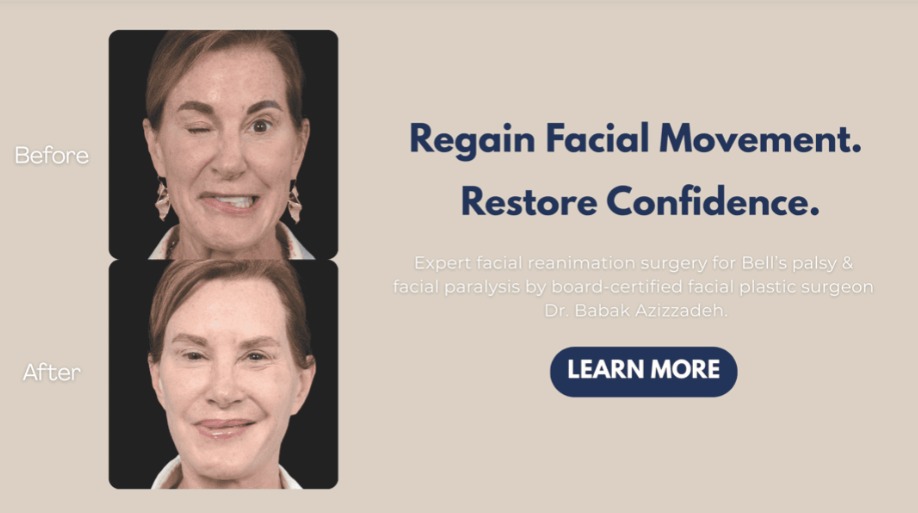
Dr. Babak Azizzadeh is a double board-certified facial plastic and reconstructive surgeon recognized for his expertise in facial reanimation and complex facial nerve disorders. At the Facial Paralysis Institute, he and his team evaluate each patient thoroughly before recommending any course of action.
To discuss your case, contact the Facial Paralysis Institute directly, or ask about whether a nerve transplant procedure is the right fit.

A Path Back to Natural Expression
Facial paralysis reshapes how a person moves through the world. CFNG offers a genuine path toward reclaiming expressions that happen without thought. For the right candidate, it can be a meaningful and lasting step toward recovery.
Frequently Asked Questions
What conditions can CFNG treat?
Common causes of facial paralysis that may be addressed with this approach include acoustic neuroma removal, trauma, infection, and certain congenital conditions. Candidacy depends on muscle viability and timing.
How is CFNG different from using the masseter or hypoglossal nerve?
Those approaches require deliberate muscle activation to produce movement. Because CFNG draws from the patient’s own facial nerve, the resulting expressions are spontaneous and emotionally driven.
Why is the sural nerve used as the donor graft?
It is long enough to bridge across the face, and its removal causes minimal functional loss, typically just a small temporary area of numbness on the outer foot.
How long does recovery take?
Early signs of nerve activity often appear within six to twelve months. Full results may take 18 months or longer, especially if a second-stage procedure is planned.
Is this procedure painful?
Surgery is performed under general anesthesia. Post-operative discomfort is mild to moderate and managed with medication. The leg donor site often causes more soreness than the facial incisions.
Is CFNG covered by insurance?
Coverage depends on the insurer and the underlying cause of paralysis. The Facial Paralysis Institute team can assist with authorization and coverage questions during the consultation process.
Request your consultation with Dr. Azizzadeh today
Call us at (310) 657-2203 to schedule an appointment.
Schedule a Consultation