Facial paralysis impacts communication and self-image. For many, achieving natural results without visible scarring is a primary goal when considering surgery. Scarless facial reanimation meets this need by prioritizing both function and aesthetics. Scarless facial reanimation addresses that concern directly, offering an approach to facial reanimation surgery that prioritizes both functional recovery and aesthetic outcomes from the start.
Key Takeaways
- Scarless facial reanimation restores movement and expression while keeping incisions hidden from visible skin surfaces.
- Not every patient with facial paralysis is an automatic candidate. Surgical suitability depends on cause, severity, and nerve status.
- Techniques like nerve grafting, muscle transfer, and targeted neurolysis can all be adapted to reduce visible scarring.
- Recovery from reanimation procedures requires time, consistent physical therapy, and realistic expectations.
- The Facial Paralysis Institute builds individualized treatment plans around each patient’s specific anatomy and goals.
What Is Scarless Facial Reanimation?
The term “scarless” doesn’t mean there’s no incision. It means surgical access is gained through hidden sites: inside the mouth, behind the ear, within the hairline, or along natural skin creases. The reanimation work gets done, but the evidence of it largely disappears over time.
For patients dealing with facial nerve disorders, this approach addresses one of the most emotionally significant concerns they bring to an initial appointment.
This isn’t a single procedure. It’s an approach that can be applied across several techniques depending on what the patient needs. A surgeon might route nerve grafts through concealed entry points, or position a gracilis muscle transplant so that incisions stay tucked away from exposed skin. The guiding principle is consistent: restore function without compounding the patient’s self-consciousness about their appearance.
Reanimation Surgery for Facial Paralysis
Who Is a Candidate?
Candidacy for scarless facial reanimation is highly individualized, with surgeons assessing factors like the duration of paralysis, nerve and muscle status, overall health, and patient goals. While no single strategy fits everyone, the best candidates generally have stable, non-progressive conditions, adequate muscle tissue, and realistic expectations, allowing for a thorough evaluation process that optimizes potential surgical outcomes.
Surgical Techniques in Scarless Reanimation
Scarless reanimation often combines several surgical strategies. When the facial nerve is damaged but muscles remain viable, nerve reconstruction is the primary option. Surgeons graft donor nerves through concealed paths to ensure recovery occurs without visible scarring.
When the nerve is too far gone to regenerate, free muscle transfer becomes necessary. A gracilis muscle transfer transplants a small portion of thigh muscle, along with its blood supply and nerve, to the face. Skilled placement makes the procedure both effective and discreet.
For patients who develop synkinesis, where nerve regrowth misdirects facial movement, selective neurolysis targets overactive nerve branches to restore a more balanced resting expression.
Dr. Babak Azizzadeh and the Scarless Approach
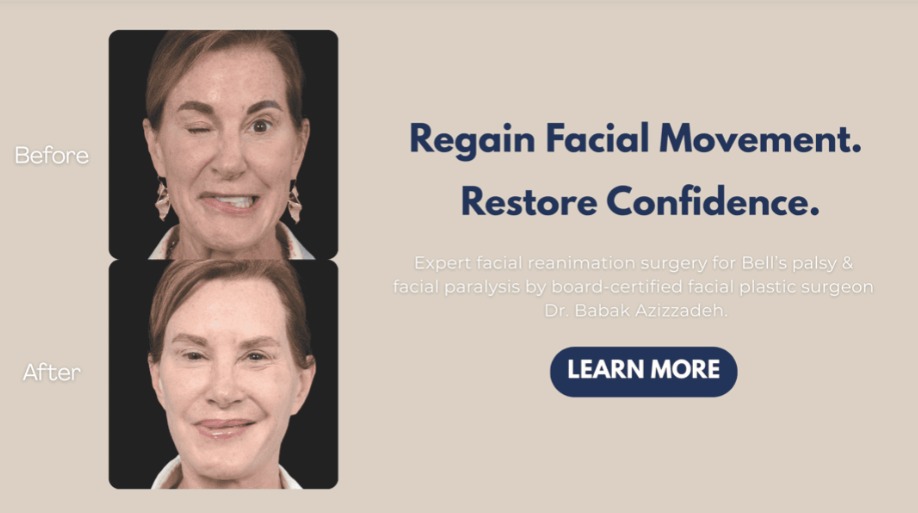
Dr. Babak Azizzadeh is a Harvard-trained facial nerve specialist and the founder of the Facial Paralysis Institute. He has spent a significant portion of his career refining techniques that address both the functional and aesthetic consequences of facial paralysis, recognizing that patients want outcomes that feel natural rather than just corrected.
Dr. Azizzadeh’s work in reanimation surgery for facial paralysis integrates nerve repair, muscle repositioning, and targeted neurolysis with a consistent focus on minimizing collateral impact to surrounding tissue. His approach reflects a long-term commitment to patient quality of life alongside visible outcomes.
If you’re weighing your options and want expert guidance, scheduling a personalized consultation at the Facial Paralysis Institute is a straightforward first step toward understanding what may be possible for your situation.
Gracilis Muscle Transplant for Facial Paralysis
Recovery and What to Expect
Recovery is gradual, and patients should go in with that understanding. Nerve regeneration takes time. Visible improvement in facial movement can take months to emerge, and full results from muscle transfer procedures may not be apparent for 12 to 18 months post-operatively. This timeline reflects the biology of nerve healing rather than any limitation of the approach.
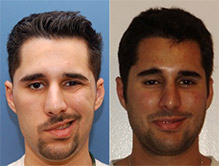
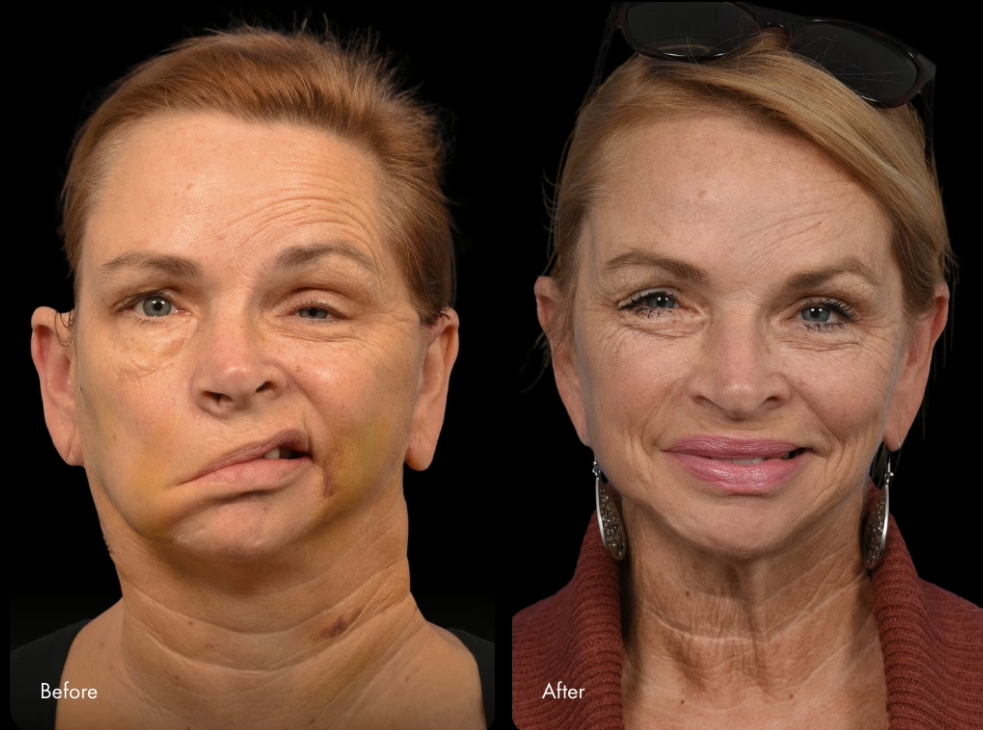
Neuromuscular retraining is a key part of the process. Physical therapy helps the brain build new pathways to control transplanted or repaired tissue, and patients who commit to it tend to see better, more natural-looking results. Before-and-after documentation throughout recovery helps both the surgical team and the patient track progress accurately.
Trust, Research, and What Patients Should Know
Patient education is vital, as outcomes improve when expectations are realistic. The Facial Paralysis Institute provides resources and encourages detailed inquiries during evaluations. Research confirms that successful reanimation significantly enhances quality of life, confidence, and emotional health.
To get direct answers from the care team about your specific situation, reaching out through the Facial Paralysis Institute contact page is the most direct path forward.
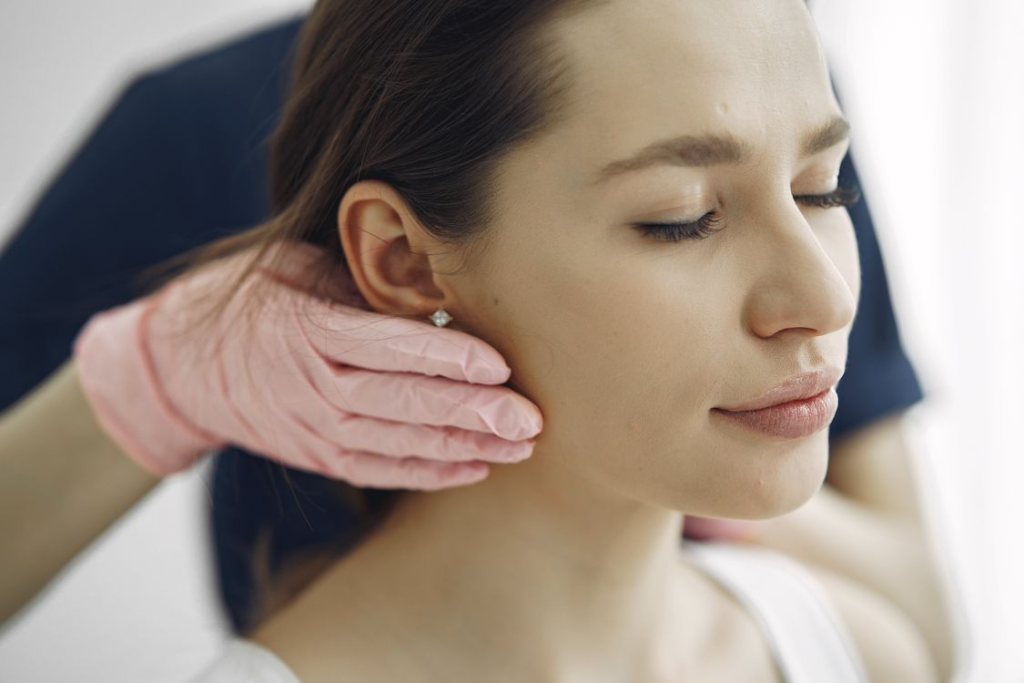
A More Complete Picture of Facial Recovery
Scarless facial reanimation prioritizes more than just aesthetics; it allows patients to seek treatment without gaining new visible scars. By combining functional restoration with minimal procedural evidence, the Facial Paralysis Institute helps patients engage more fully in recovery and gain confidence in their outcomes. This integrated approach to care is central to the Institute’s methodology for treating facial paralysis.
Frequently Asked Questions
Is scarless facial reanimation truly scar-free?
Not entirely. It uses hidden incision sites like the mouth, hairline, or behind the ear to minimize visibility, though minor tissue disruption remains.
How long does recovery take after scarless reanimation?
Timelines vary; nerve regeneration takes months, while muscle transfers may require 12 to 18 months for full results. Physical therapy significantly aids recovery.
What causes facial paralysis?
It can stem from various factors, including Bell’s palsy, trauma, stroke, acoustic neuroma removal, Ramsay Hunt syndrome, or congenital conditions.
Can selective neurolysis be combined with other reanimation techniques?
Yes, it is frequently paired with other procedures like nerve grafting or muscle transfer, especially to address synkinesis.
How do I know if I’m a good candidate for this approach?
A professional evaluation with a specialist is necessary to assess factors like paralysis duration, muscle health, and individual goals.
Request your consultation with Dr. Azizzadeh today
Call us at (310) 657-2203 to schedule an appointment.
Schedule a Consultation