Temporalis tendon transfer offers a reliable path to restored facial symmetry for patients living with long-standing facial paralysis. This single-stage procedure delivers immediate improvement at rest and gradual return of dynamic movement, making it an excellent option when traditional nerve repair techniques are no longer viable.
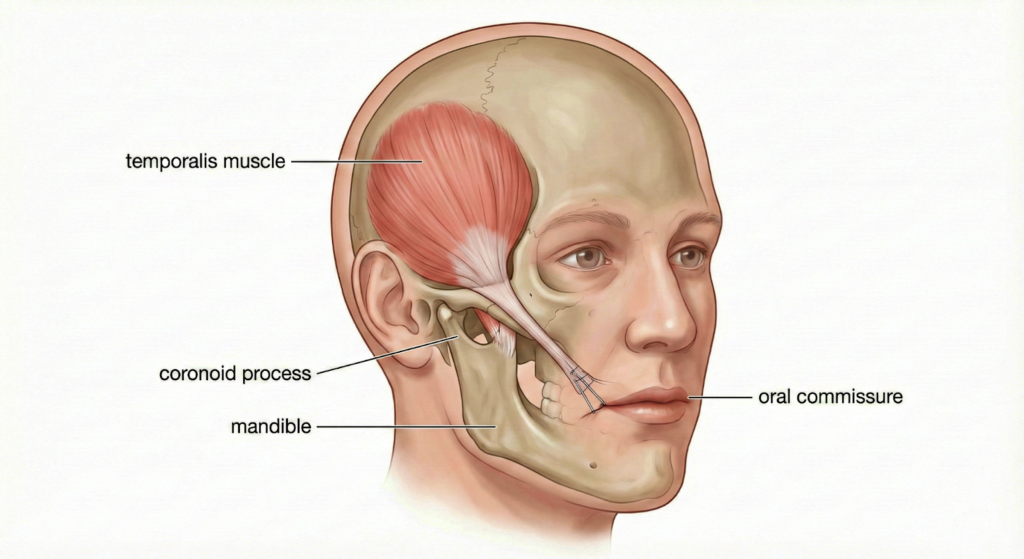
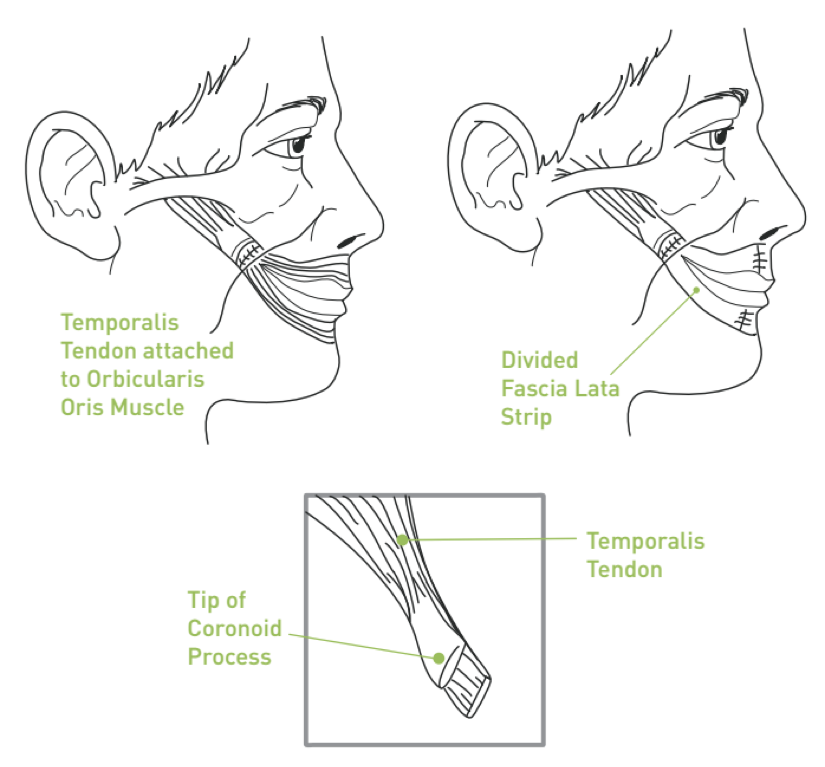
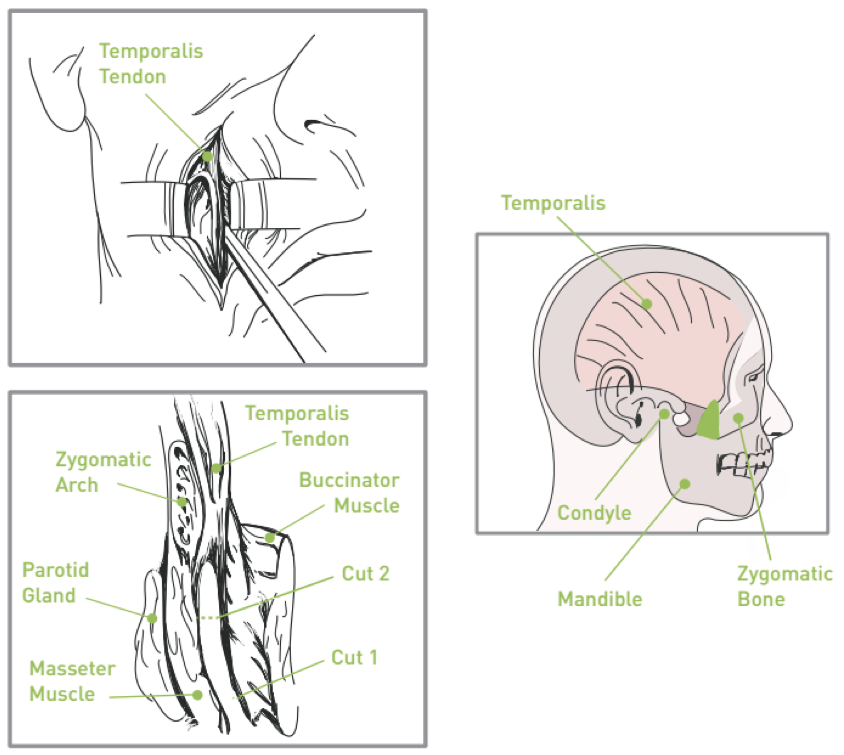
Temporalis treatment involves an incision into the temporalis muscle, between the lip and cheek. Next, the tendon and bone are attached to muscles at the corner of the mouth to enhance facial symmetry.
The temporalis muscle sits on the side of the head and serves as one of four major muscles used for chewing. By redirecting this muscle’s attachment point from the jaw to the corner of the mouth, surgeons can restore upward movement and create a more balanced facial appearance.
Following temporalis treatment, neuromuscular retraining (NMR) may be required. During NMR, a patient meets with a physical therapist and learns how to move the temporalis muscle once again. This allows a patient to regain the ability to use the temporalis muscle properly.
Who Is a Candidate for Temporalis Tendon Transfer?
This procedure is particularly well-suited for patients experiencing:
- Long-standing facial nerve paralysis lasting more than two years
- Loss of multiple cranial nerves
- Loss of the distal facial nerve stump or atrophy of facial muscles
- Cases where cross-facial nerve grafts or other advanced treatments are not viable options
Patients over the age of 55 often benefit from temporalis tendon transfer, as do those who prefer a single-stage procedure with near-immediate results rather than the prolonged timeline associated with free tissue transfer techniques.
During your consultation, your surgeon will evaluate your specific condition, smile pattern, and treatment goals to determine whether temporalis tendon transfer is the right approach for your needs.
Is Temporalis Muscle Pain Common After Treatment?
Patients may experience some side effects after a temporalis muscle transfer. Mild to moderate jaw discomfort can occur following a Facial Paralysis Temporalis Muscle. However, this discomfort generally subsides shortly after treatment. Patients who experience severe side effects that linger for weeks or months following a temporalis transfer should consult with their doctor.
Most patients find the recovery process manageable. Initial swelling and bruising typically resolve within the first few weeks, and many patients return to daily activities relatively quickly. A soft food diet is recommended during the initial healing period to allow facial muscles to recover without strain.
What Are the Long-Term Results of Temporalis Muscle Treatment?
Temporalis transfer has been shown to help patients over the age of 55 alleviate long-standing facial paralysis. It can also provide a viable alternative for patients who are ineligible for cross-facial nerve grafts or other advanced Facial Paralysis Temporalis Muscle treatments. Also, temporalis transfer performed via a facelift technique can deliver long-term results.
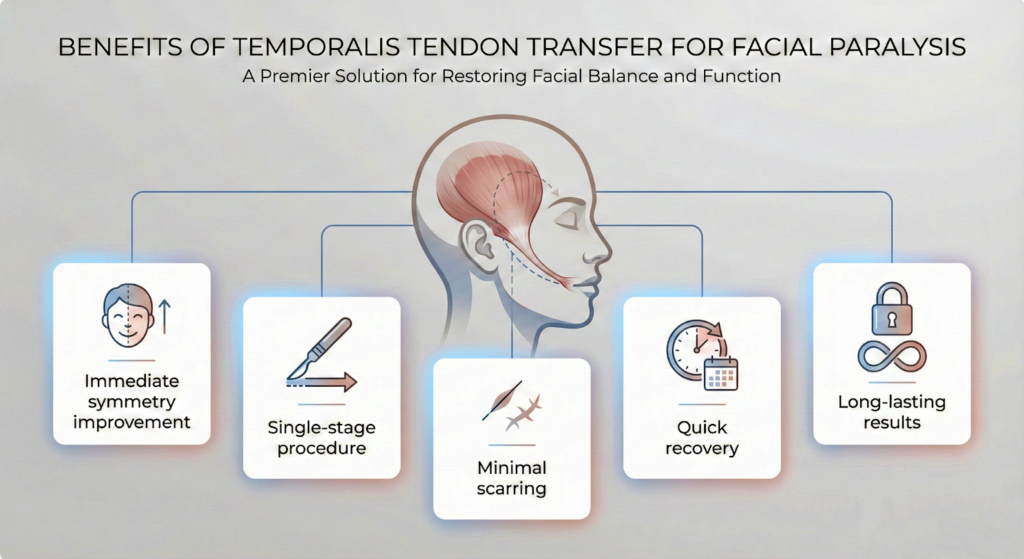
One of the key advantages of temporalis tendon transfer is that results are visible immediately. Patients notice improved facial symmetry at rest right after surgery, with dynamic movement developing as they progress through rehabilitation. The procedure provides a very long-lasting suspension of the face and often improves speech and eating function as well.
What is Temporalis Tendon Transfer?

Muscle Transposition Techniques for Facial Reanimation
When traditional nerve repair or grafting techniques are not possible due to prolonged paralysis, muscle transposition offers an effective alternative. The temporalis muscle is the most commonly used option due to its favorable anatomy and reliable outcomes.
Indications:
- Long standing facial nerve paralysis (FNP) (> 2yrs)
- Loss of multiple cranial nerves
- Loss of distal FN stump or atrophy of facial muscles
Muscle Sources:
- Temporalis
- Masseter
- Digastric
With a postoperative facial NMR program in physiotherapy, temporalis muscle transfer patients can restore natural facial movement after the Facial Paralysis Temporalis Muscle treatment. In the primary stage of exercises, most patients can regain voluntary control of their temporalis muscle.
The second stage in which patients are encouraged to obtain the newly learned movements to a state of automatic function in normal facial expression is less predictable. Therefore, muscle transfers may offer only minor advantages over static suspension procedures. In addition, a gracilis muscle transfer to the trigeminal nerve can provide predictable facial movement in contrast to a temporalis transfer.
Patient Satisfaction and Clinical Outcomes
Patient satisfaction following a temporalis tendon transfer has been shown to be relatively high in several research papers. In a study published in Archives of Facial Plastic Surgery, the mean score of patients who underwent a temporalis transfer was 8.5 out of 10). Four patients in the study were graded as excellent to superb, and three were rated as having good postoperative results.
Furthermore, the facial movement of patients in the study was evaluated. It ranged from 1.6 to 8.5 mm, with mean movement of the oral commissure of 4.2 mm. And, one patient developed postoperative salivary fluid collection that required drainage.
More recent clinical data continues to support these findings. A 2024 systematic review and meta-analysis examining temporalis muscle-based facial reanimation outcomes confirmed strong patient satisfaction rates. Studies examining minimally invasive temporalis tendon transfer techniques show that facial symmetry during smiling improved significantly, with the percentage difference between affected and unaffected sides dropping from approximately 18.6% before surgery to just 5% afterward.
Muscle Transportation Techniques: Temporalis Muscle Transfer
The orthodromic temporalis tendon transfer technique offers several distinct advantages over traditional approaches:
- Non-spontaneous dynamic reanimation
- Good vector control of smile
- Does not interfere with potential native nerve regeneration
- Dynamic smile can look artificial4
The modern orthodromic technique eliminates the telltale signs associated with classic temporalis transfer, such as depression in the temple or tissue protrusion around the zygomatic arch. The incision can be placed within a natural skin crease between the lip and cheek, leaving minimal visible scarring. Recent studies on intraoral and transcutaneous approaches confirm the technique offers quick postoperative recovery and minimal morbidity.
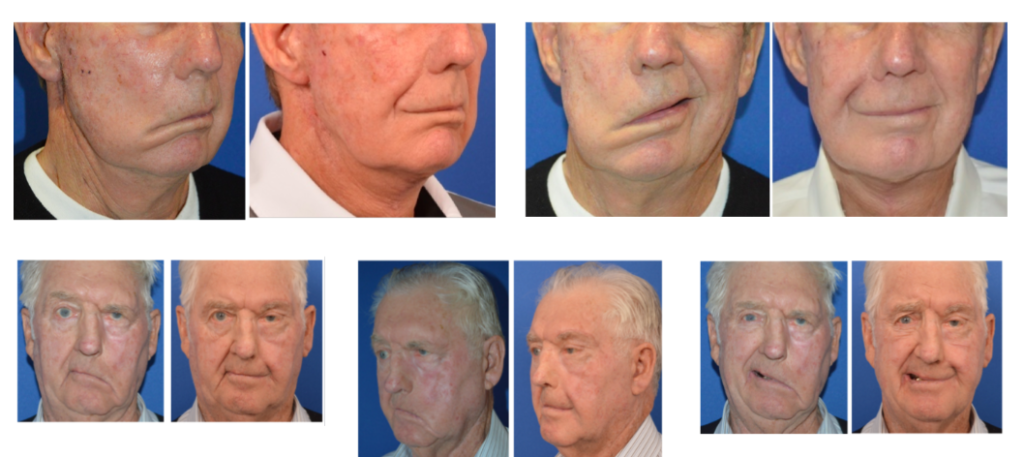
Before & After Temporalis Tendon Transfer Results
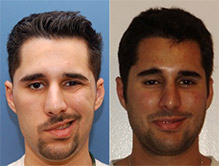
Visual documentation of patient outcomes provides valuable insight into what temporalis tendon transfer can achieve. The following images demonstrate the improvement in facial symmetry and function that patients have experienced under Dr. Azizzadeh’s care.
Schedule Your Consultation
A Facial Paralysis Temporalis Muscle treatment can deliver exceptional results when it is performed by a trained professional. Dr. Babak Azizzadeh of The Facial Paralysis Institute is a globally recognized facial plastic and reconstructive surgeon who uses state-of-the-art techniques to treat facial paralysis. He can evaluate a patient dealing with facial paralysis symptoms and determine if a temporalis transfer or other treatment options can be used to correct these issues.

With extensive experience in facial reanimation surgery and a commitment to personalized patient care, Dr. Azizzadeh has helped countless patients restore facial function and regain confidence. Each treatment plan is tailored to the individual patient’s condition, goals, and lifestyle.
Dr. Azizzadeh is available for in-person and virtual consultations. To learn more or to schedule a consultation with Dr. Azizzadeh, please contact us online or call us today at (310) 657-2203.
Related Conditions We Treat
[KEEP ALL EXISTING INTERNAL LINKS]
BELL’S PALSY
ACOUSTIC NEUROMA
PAROTID TUMOR
SYNKINESIS
FACELIFT SURGERY
NERVE INJURY
MOEBIUS SYNDROME
HEMIFACIAL MICROSOMIA
PAROTID
HEMIFACIAL SPASM
See the Results of Facial Paralysis Surgery
Frequently Asked Questions About Temporalis Tendon Transfer
How long does temporalis tendon transfer surgery take?
The procedure is considered relatively quick compared to other facial reanimation options. Most surgeries are completed in a few hours, and patients typically require only a short hospital stay for monitoring and post-operative care.
When will I see results from temporalis tendon transfer?
One of the primary advantages of this procedure is that results are visible immediately. Patients notice improved facial symmetry at rest right after surgery. Dynamic movement develops over time as patients progress through rehabilitation and learn to use the repositioned muscle for smiling.
How long do the results of temporalis tendon transfer last?
Temporalis tendon transfer provides a very long-lasting suspension of the face. Results can last for many years, though individual outcomes may vary based on factors such as age, overall health, and adherence to post-operative rehabilitation recommendations.
Is temporalis tendon transfer better than gracilis free flap surgery?
Both procedures have distinct advantages depending on the patient’s situation. Temporalis tendon transfer offers immediate results in a single-stage procedure with minimal scarring. Gracilis free flap surgery can provide more spontaneous smile movement but requires multiple stages and a longer recovery period. A 2018 JAMA study comparing both techniques found that each approach has specific strengths depending on patient goals. During your consultation, Dr. Azizzadeh will help determine which approach is best suited to your specific needs and goals.
What is the recovery time for temporalis tendon transfer?
Most patients return to daily activities within a few weeks. Initial swelling and discomfort typically subside quickly. A soft food diet is recommended during the early healing phase. Full results continue to improve over several months as patients progress through facial rehabilitation.
Will I have visible scarring after temporalis tendon transfer?
Modern techniques allow surgeons to place incisions within natural skin creases, such as the nasolabial fold or inside the mouth. This minimizes visible scarring and produces excellent aesthetic outcomes. Any residual scarring typically fades over time.
Can temporalis tendon transfer be combined with other procedures?
Yes. Temporalis tendon transfer is often performed as part of a comprehensive facial reanimation approach. Depending on the patient’s specific needs, it may be combined with procedures such as brow lifts, eyelid weight placement, or other treatments to address multiple aspects of facial paralysis.
Request your consultation with Dr. Azizzadeh today
Call us at (310) 657-2203 to schedule an appointment.
Schedule a Consultation