Bell’s Palsy is a medical condition that results in immediate facial paralysis on one side of the face. The paralysis can cause people to experience facial drooping and impact their sense of taste. Bell’s palsy can also make it difficult for patients to create saliva and tears.
The National Institute of Neurological Disorders and Stroke (NIH) points out that Bell’s palsy impacts approximately 40,000 Americans annually. However, many Bell’s palsy myths persist that cause people to forgo treatment.
At The Facial Paralysis Institute, we’re here to educate individuals about Bell’s palsy and its short- and long-term effects. As such, we’re ready to put common Bell’s palsy myths to rest.
Bell’s palsy can be alarming, especially when face drooping comes on suddenly. Understanding the facts about this condition is the first step toward getting the right care and restoring your quality of life.
5 Bell’s Palsy Myths You Need to Know About
Here are five common myths about living with Bell’s palsy.
1. Bell’s Palsy Causes Permanent Facial Paralysis
NIH defines Bell’s palsy as a form of temporary facial paralysis that is caused by damage or trauma to the facial nerve.
With Bell’s palsy, the facial nerve that directs muscles on one side of the face is disrupted. This interferes with the messages that the brain sends to facial muscles, resulting in temporary facial paralysis.
In 85 percent of Bell’s palsy cases, facial paralysis goes away on its own. However, in approximately 15 percent of patients, the facial nerve function does not return to normal. With treatment, a Bell’s palsy patient may restore a portion of their facial nerve function. But, full function may not return. In cases where a patient experiences temporary facial paralysis for a minimum of eight months, meet with expert facial plastic and reconstructive surgeon Dr. Babak Azizzadeh. In doing so, Dr. Azizzadeh can evaluate the patient and explore various treatment options.
A common question patients have is: does Bell’s palsy go away on its own? For most people, the answer is yes. But ‘most’ isn’t everyone. When recovery takes longer than expected, or when facial drooping persists past the typical recovery window, seeking a specialist’s input is the right move. The Facial Paralysis Institute offers patients a thorough evaluation to determine the best path forward.
https://facialparalysisinstitute.com/conditions/bells-palsy
2. There Is a Direct Link Between Bell’s Palsy and Cold Air
Exposure to cold has not been shown to contribute to Bell’s palsy symptoms. Also, there is no direct link between Bell’s palsy and fans. Therefore, people who spend an extended period of time in front of a fan on a hot day do not face a greater risk of Bell’s palsy symptoms than others.
The idea that sleeping with a fan on can cause facial paralysis is one of the most persistent myths out there. Many people believe that cold air blowing on the face overnight can trigger Bell’s palsy, but this claim has no scientific basis.
Bell’s palsy is believed to be caused by viral inflammation of the facial nerve, not cold air or fans. No studies have found a causal link between fan exposure and Bell’s palsy. If someone develops face drooping after sleeping with a fan on, the timing is coincidental, not causal.
3. There Is No Surefire Treatment for Bell’s Palsy
Although Bell’s palsy may seem difficult to overcome, many treatments are available to help patients dealing with long-standing Bell’s palsy.
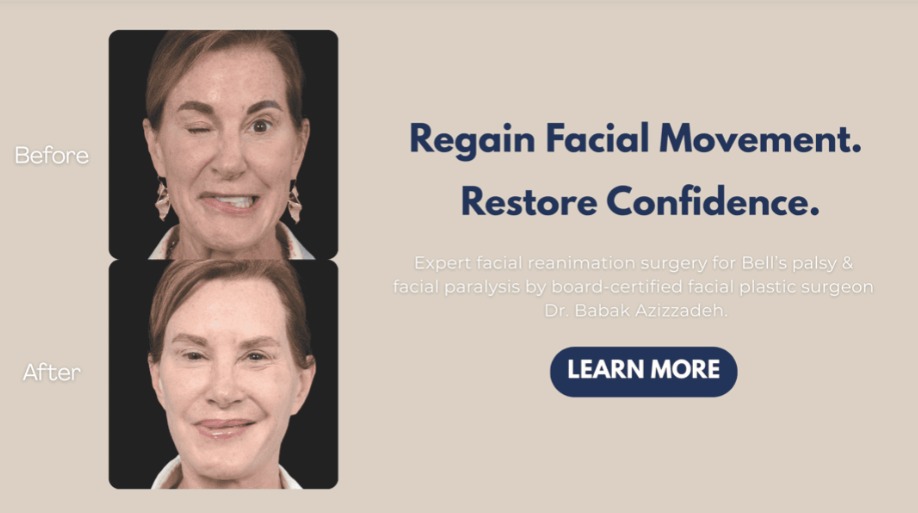
Selective neurolysis is one of the most common Bell’s palsy treatments. This procedure involves releasing the platysma muscle, the muscle that pulls the face downward, and reducing activity in nerves that work against the smile mechanism. That way, selective neurolysis helps a Bell’s palsy patient regain the ability to smile.
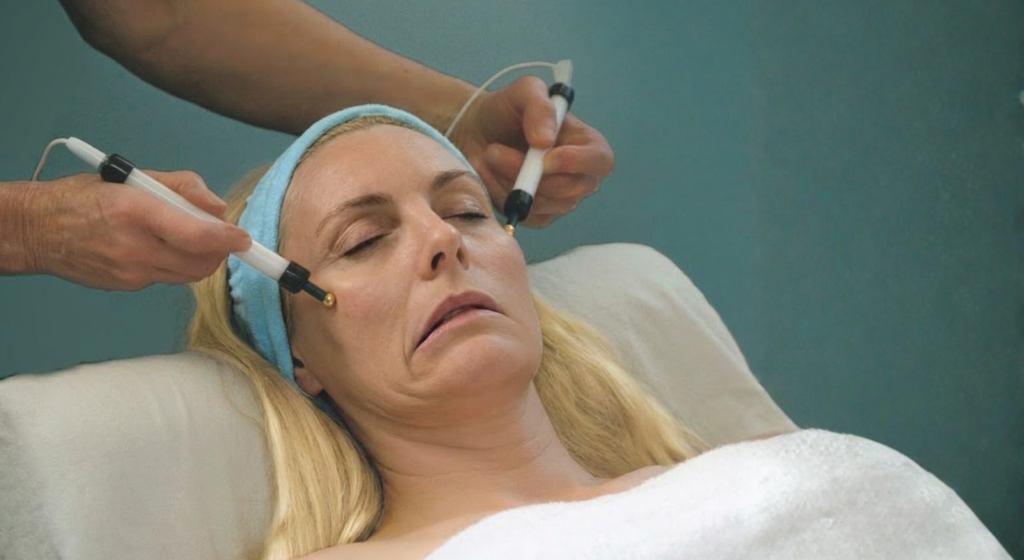
Botox can be an effective non-surgical treatment for Bell’s palsy. It is frequently used as a cosmetic treatment to reduce the signs of aging in the face. And, when Botox is injected by a facial nerve expert, it has been shown to help Bell’s palsy patients restore facial symmetry and improve their facial appearance.
Clearly, there are many viable treatments for Bell’s palsy. By meeting with Dr. Azizzadeh, Bell’s palsy patients can learn about these treatments and find one that matches or exceeds their expectations.
4. Chewing Gum for Bell’s Palsy Offers a Viable Treatment
Some Bell’s palsy patients initially believe that chewing gum can stimulate facial muscle movement. Thus, they may chew gum at symptomatic onset in the hopes that it will allow them to correct Bell’s palsy without further medical treatment.
Chewing gum for Bell’s palsy is ineffective. This is due to the fact that chewing is performed by the muscles of mastication supplied by the trigeminal nerve. Furthermore, chewing gum can inadvertently increase the risk of facial synkinesis.
5. In General, the Prognosis for Bell’s Palsy Patients Is Not Good
Bell’s palsy may seem like a long-term problem, but NIH states the prognosis for Bell’s palsy patients is “generally very good.”
Those dealing with Bell’s palsy may start to see symptomatic improvement within the first two weeks, NIH notes. In addition, NIH states most Bell’s palsy patients fully recover from temporary facial paralysis within about three to six months.
https://facialparalysisinstitute.com/blog/what-is-bells-palsy-heres-everything-you-need-to-know
5 Bell’s Palsy Facts You Need to Know About
Along with myths, let’s look at five important facts about Bell’s palsy.
1. There Is No Known Cause of Bell’s Palsy.
The exact cause of Bell’s palsy remains unknown. But, Bell’s palsy is commonly viewed as a viral infection. To date, research has linked Bell’s palsy to the herpes simplex virus, which can cause cold sores and genital herpes. It has also been connected to the herpes zoster virus, cytomegalovirus, and Epstein-Barr virus.
2. Bell’s Palsy Can Affect Anyone, Regardless of Age.
Men, women, and children can experience Bell’s palsy symptoms at any age. Understanding the difference between Bell’s palsy vs stroke is also important, since the sudden onset of facial weakness can be mistaken for a stroke. Bell’s palsy has been shown to affect patients of different races and genders equally.
3. Those Who Are Pregnant or Dealing with Diabetes Face an Increased Risk of Developing Bell’s Palsy.
Women who are pregnant face a higher risk of Bell’s palsy than non-pregnant women. Pregnant women are increasingly prone to Bell’s palsy symptoms in the third trimester or in the first few days after birth.
4. Bell’s Palsy That Goes Unaddressed Can Cause Long-Term Health Problems.
If Bell’s palsy symptoms linger for more than a month, they can cause serious health issues. For some Bell’s palsy patients, partial or complete blindness in the eye on the paralyzed side of the face can occur. These patients are also susceptible to irreversible damage to the facial nerve and abnormal regrowth of nerve fibers.
5. Bell’s Palsy Should Be Treated Immediately.
At the first sign of Bell’s palsy or facial paralysis, it is paramount to seek medical treatment. The detailed guide What Is Bell’s Palsy? Here’s Everything You Need to Know walks patients through symptoms, causes, and when to call a doctor. A medical evaluation allows a doctor to assess the severity of symptoms and provide a personalized treatment recommendation to alleviate them as quickly and effectively as possible.
Along with pregnant women, those who are dealing with diabetes face a greater risk of Bell’s palsy than others. Research has shown that there may be a correlation between poor glycemic control and the development of Bell’s palsy in adult patients coping with diabetes.
Is Bell’s Palsy Serious?
Bell’s palsy is considered a medical condition worth taking seriously, even though it’s not life-threatening in most cases. When facial paralysis appears suddenly, it can be hard to tell whether you’re dealing with Bell’s palsy or something more urgent, like a stroke. Getting a proper diagnosis right away matters. According to Johns Hopkins Medicine, Bell’s palsy affects roughly 23 people per 100,000 each year, and most patients recover well when treatment begins early.
That said, is Bell’s palsy dangerous? In the majority of cases, no. But for a subset of patients, particularly those who go untreated or who experience severe nerve damage, complications can develop. These may include chronic facial drooping, difficulty closing the eye fully, and nerve misfiring known as synkinesis. The earlier you seek care, the better your chances of a complete recovery.
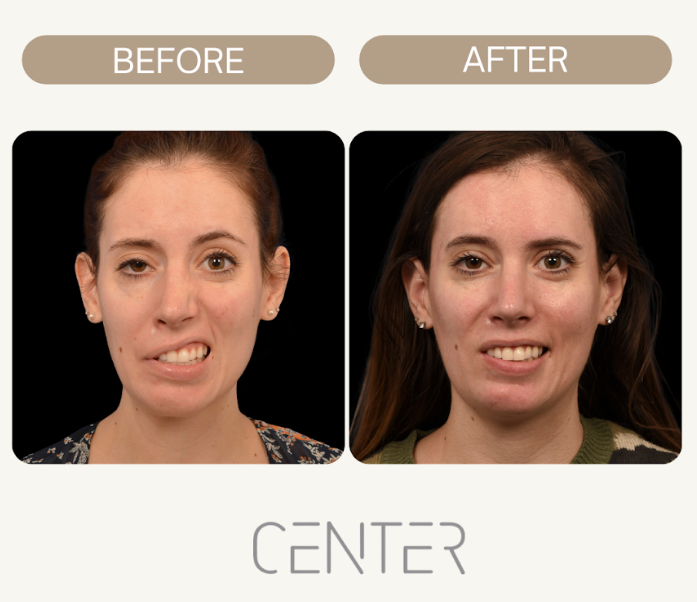
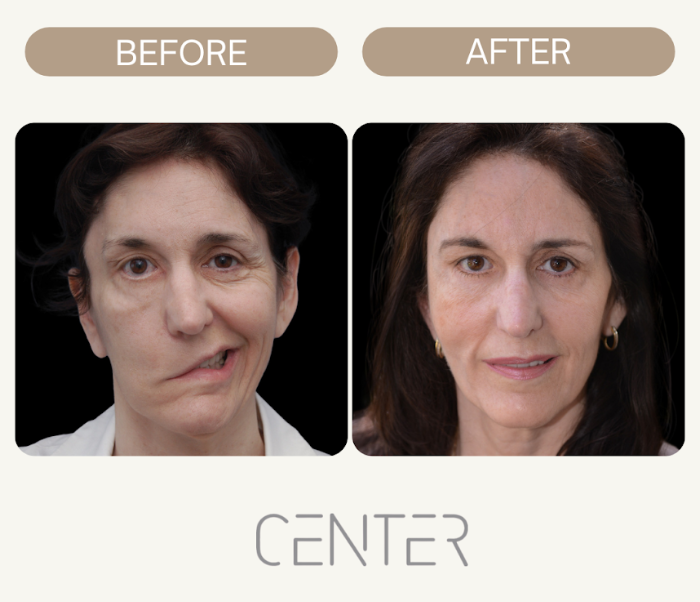
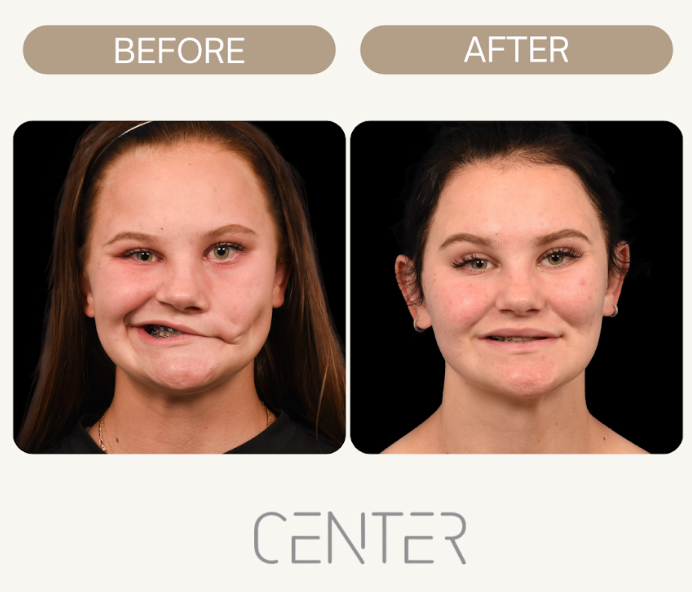
What Does Bell’s Palsy Look Like?
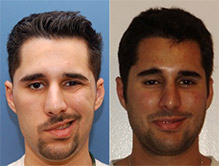
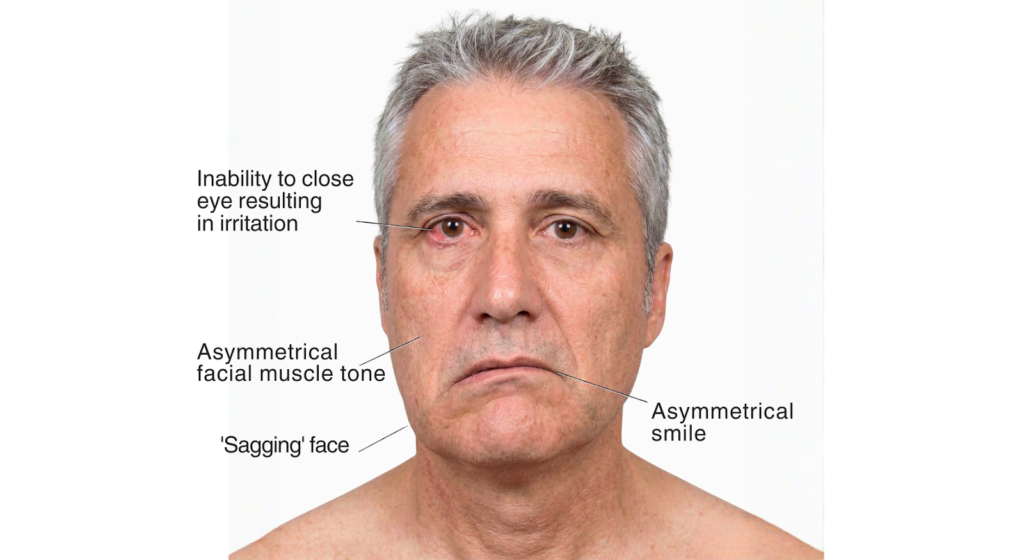
Bell’s palsy typically causes sudden, noticeable changes on one side of the face. Most patients experience facial drooping, an inability to close the eye fully, and a lopsided smile. Some also notice changes in their ability to taste food or heightened sensitivity to sound on the affected side.
The condition can range from mild weakness to complete paralysis on one side. In more severe cases, the eye on the affected side may not fully close, leading to dryness and irritation. The overall appearance can be distressing for patients, which is why early treatment matters so much.
Below are examples of real Bell’s palsy patients treated at the Facial Paralysis Institute.
Frequently Asked Questions About Bell’s Palsy
Is Bell’s palsy dangerous?
Bell’s palsy is not considered life-threatening, but it should be treated promptly. In rare cases, untreated Bell’s palsy can lead to complications such as nerve damage, chronic facial drooping, or synkinesis.
Does Bell’s palsy go away on its own?
In about 85 percent of cases, Bell’s palsy resolves without medical intervention. Most patients see improvement within two to three weeks and full recovery within three to six months. Some patients, however, require treatment for a complete recovery.
Can sleeping with a fan on cause Bell’s palsy?
No. The idea that fan exposure causes Bell’s palsy is a myth. Bell’s palsy is linked to viral infections, not cold air or fans. There is no scientific evidence connecting fan use to facial paralysis.
Is Bell’s palsy permanent?
For the majority of patients, Bell’s palsy is not permanent. About 15 percent of cases do not fully resolve on their own, but treatment options are available to improve facial function significantly.
What does Bell’s palsy look like?
The most visible sign is sudden facial drooping on one side of the face. Other symptoms include difficulty closing the eye, a lopsided smile, changes in taste, and increased sound sensitivity on the affected side.
Does Bell’s palsy come and go?
Bell’s palsy does not typically recur, but in some cases it can. Recurrent Bell’s palsy affects a small percentage of patients and may indicate an underlying health condition worth investigating.
Is Bell’s palsy serious?
Bell’s palsy can become serious if left untreated or if it progresses to full nerve damage. Seeking care early, especially from a facial nerve specialist, gives patients the best chance of a complete recovery.
Learn More About Bell’s Palsy
For those who want to learn more about Bell’s palsy, Dr. Azizzadeh can provide additional insights into the condition. Dr. Azizzadeh offers in-person and virtual consultations to those who are exploring Bell’s palsy treatment options. To schedule a consultation with Dr. Azizzadeh, please contact us online or call us today at (310) 657-2203.
Request your consultation with Dr. Azizzadeh today
Call us at (310) 657-2203 to schedule an appointment.
Schedule a Consultation