Waking up and noticing one side of your face looks different can be alarming. Maybe your smile seems lopsided, or you’re having trouble closing one eye. These changes could point to facial droop, where the muscles on one side weaken or stop working. What is bell’s palsy is often the first question people ask. Understanding the cause matters because treatment and recovery vary.
Key Takeaways
- Facial droop happens when facial muscles weaken or become paralyzed, often affecting one side.
- Bell’s palsy is common, but stroke, Ramsay Hunt syndrome, and tumors can also cause symptoms.
- Location matters—left-sided, right-sided, or eye-specific droop offer clues about the condition.
- Sudden facial droop with stroke symptoms requires immediate emergency care.
- Treatment depends on the cause and may include medications, therapy, or surgery.
What Is Facial Droop?
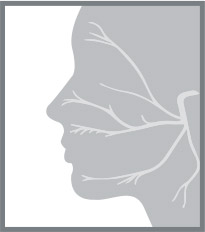
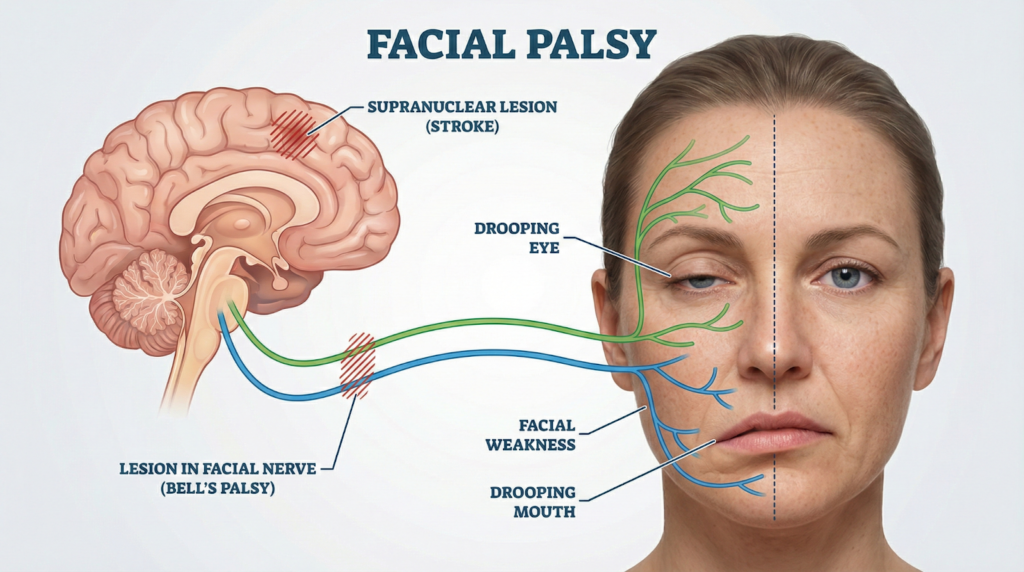
Facial droop happens when muscles on one or both sides of your face don’t function properly. This makes your face appear uneven. You might struggle with smiling, blinking, or closing your mouth. Severity ranges from subtle weakness to complete paralysis. The facial nerve controls expression muscles. When this nerve becomes inflamed, compressed, or damaged, it can’t send proper signals. Bell’s palsy is one cause, but infections, strokes, and tumors can lead to similar outcomes.
Droopy Left Side of the Face
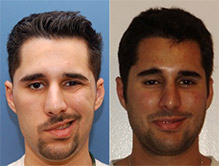
When the left side droops, there’s likely an issue affecting the left facial nerve or corresponding brain area. Bell’s palsy usually targets one side. You’d notice the left corner of your mouth dipping, your left eyelid refusing to close, and lack of movement. A stroke can also cause left-sided droop. If the right side of your brain has a blockage or bleed, the left side of your face could be affected. Stroke symptoms appear suddenly and often include arm weakness, speech difficulties, or severe headache.
Droopy Right Side of the Face
Right-sided droop affects the opposite side. The right facial nerve or left brain hemisphere could be involved. Ramsay Hunt syndrome can lead to right-sided droop when the varicella-zoster virus reactivates near the facial nerve. You might notice a painful rash around your ear, hearing loss, or vertigo. Prompt treatment minimizes nerve damage.
Droopy Eyes
Drooping eyelids can be standalone or part of broader facial droop. If just the upper eyelid sags, it could be ptosis, where the muscle lifting the eyelid weakens. However, if drooping accompanies weakness elsewhere, it’s more likely Bell’s palsy or stroke. When droop affects the eyes, lubrication becomes crucial. If you can’t close your eye completely, it’s exposed to air and debris. Using artificial tears during the day and lubricating ointment before bed helps protect your eye.
https://facialparalysisinstitute.com/blog/what-is-bells-palsy-heres-everything-you-need-to-know
What Causes Facial Droop?
Several conditions lead to facial droop. Bell’s palsy tops the list, typically from viral infections that inflame the facial nerve. Research has linked herpes simplex virus and bell’s palsy, suggesting viral reactivation may trigger it. Strokes are critical causes. When blood flow to the brain is blocked, the affected tissue can’t function. Unlike Bell’s palsy, stroke-related droop strikes suddenly. Tumors can press on the facial nerve and cause gradual weakness. Infections or trauma from accidents can also damage the nerve.
How Is Facial Droop Diagnosed?
Diagnosis starts with physical examination. Your doctor observes your face and asks you to smile, close your eyes, raise your eyebrows, and puff your cheeks. These tests pinpoint weak muscles. MRI or CT scans reveal tumors, stroke signs, or inflammation. Blood tests might rule out infections. Sometimes electromyography measures electrical activity in facial muscles, helping determine nerve damage extent.
https://facialparalysisinstitute.com/blog/bells-palsy-vs-stroke
Treatment Options
Treatment depends on the cause. For Bell’s palsy, corticosteroids reduce inflammation. Studies show antiviral medications for bell’s palsy may help when started early. Physical therapy maintains muscle tone. If stroke is the cause, emergency treatment restores blood flow. For tumors or nerve compression, surgery might be necessary. Some patients benefit from bell’s palsy treatment options including facial reanimation surgery.
The Facial Paralysis Institute, led by Dr. Babak Azizzadeh, specializes in advanced surgical and non-surgical treatments. Dr. Azizzadeh is a dual-board-certified facial plastic and reconstructive surgeon with extensive experience in facial reanimation. His approach combines cutting-edge techniques with personalized care to help patients achieve optimal outcomes.
When to Seek Medical Attention
If facial droop appears suddenly with arm weakness, slurred speech, or severe headache, call 911 immediately. These signal stroke. Even if symptoms resolve quickly, seek care. For gradually developing droop, schedule an appointment soon. Early diagnosis improves outcomes. Following treatment guidelines for bell’s palsy ensures appropriate care. If you’re experiencing facial droop, schedule a consultation to explore your options.

Conclusion
Facial droop stems from various causes, from Bell’s palsy to stroke to tumors. Recognizing symptom patterns and getting prompt care makes a difference in outcomes. With proper diagnosis and treatment, many people regain facial function and quality of life.
Frequently Asked Questions
Can facial droop affect both sides?
Yes, though less common. Bilateral facial paralysis can occur with conditions like Guillain-Barré syndrome affecting both facial nerves.
How long does Bell’s palsy recovery take?
Most people start improving within three weeks and recover fully within three to six months. Some cases take up to a year.
Is facial droop always permanent?
No, many cases are temporary, especially Bell’s palsy. Permanence depends on the cause and treatment timing.
What’s the difference between Bell’s palsy and stroke?
Bell’s palsy affects the facial nerve directly and develops over hours. Stroke affects the brain, appears suddenly, and often includes arm weakness or speech problems.
Can stress cause facial droop?
Stress doesn’t directly cause facial droop, but it may contribute to Bell’s palsy by weakening the immune system and making viral reactivation more likely.
Request your consultation with Dr. Azizzadeh today
Call us at (310) 657-2203 to schedule an appointment.
Schedule a Consultation