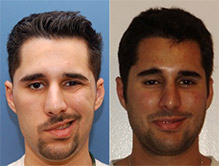
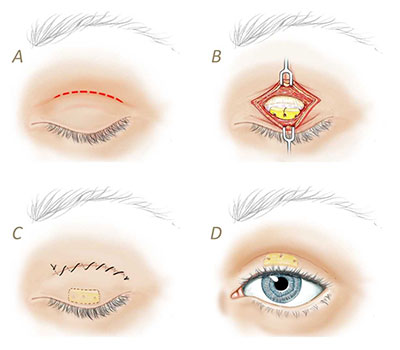
An unfortunate result of most types of facial paralysis is the loss of the ability to close the eyelid. The inability to blink and close the eye puts the eye at great risk for injury or infection due to the fact the eyelid keeps the eyeball lubricated and protected from foreign objects. Sometimes in patients with facial palsy, normal eyelid function does return, but for those who do not regain movement, the surgical placement of eyelid gold weights may be an effective option.
Babak Azizzadeh, MD, FACS is a world-renowned expert in the field of facial paralysis who works alongside a team of oculoplastic surgeons who have helped countless patients regain normal eyelid function through the use of gold weights. Dr. Azizzadeh and his team specialize in gold eyelid weight treatments to restore protective blinking and improve quality of life for facial paralysis patients.
What Are Eyelid Gold Weights?
To help prevent eye damage and restore the eyelid closure movement that has been impaired by facial paralysis, a small eyelid gold weight placement can be surgically implanted inside of the upper eyelid. The gold eyelid weight is designed to assist the eyelid in closing using weight and gravity, working with the body’s natural movement to create a protective blink reflex.
Eyelid gold weights are made in a variety of sizes and weights to ensure that each patient gets the perfect weight for them. During a consultation with Dr. Azizzadeh he will determine if the gold weight eyelid procedure is right for you, especially if you’re dealing with Hemifacial Spasm.
Eye paralysis is often caused by damage to the seventh cranial nerve, also called the facial nerve, which can result in facial nerve palsy and eye paralysis. Causes for facial nerve paralysis include Bell’s palsy, serious bacterial infections, facial trauma, Ramsay Hunt Syndrome and tumors. Understanding these conditions helps patients recognize when they need specialized intervention. To aid patients in understanding how these issues can impact the eye, it’s helpful to take a deeper look at each eye paralysis cause individually:
Bell’s Palsy
This acute, unexplained paralysis in the face usually happens suddenly, peaks within a few days, and resolves in many patients over the course of several months. While roughly 70% of patients experience full recovery, those who do not may face permanent challenges with facial movement and eye protection. In some cases, this condition can cause permanent facial and eye paralysis. One common approach for managing persistent symptoms is bell’s palsy treatment options that address both functional and aesthetic concerns. To address eye protection issues, eyelid gold weight placement has emerged as a potential solution to solving eye paralysis.
Related: What Is Bell’s Palsy? Here’s Everything You Need to Know
Bacterial and Viral Infections
There are a host of bacterial as well as viral infections that can irritate or damage the facial nerve and cause eye paralysis, including mastoiditis, otitis media, Lyme disease, enterovirus, polio, mumps, and HIV, to name a few. These infections can lead to inflammation that compresses or damages the facial nerve, resulting in impaired eyelid function. If a patient is experiencing unexplained facial or eye paralysis, one of these bacterial or viral infections may be the root cause.
Tumors
If a tumor is present anywhere in the region of the skull, it may cause facial paralysis that slowly becomes noticeable over time, unlike the rapid onset of Bell’s palsy. These growths can be benign or malignant, and they often require comprehensive evaluation including imaging studies to determine the appropriate treatment approach. Acoustic neuromas, facial nerve schwannomas, and parotid gland tumors are among the most common types that affect facial nerve function.
Other Conditions
Patients suffering from conditions such as Guillain-Barre syndrome, Melkersson-Rosenthal syndrome, and diabetes complications can also experience eyelid paralysis. Some people born with conditions such as Moebius syndrome may experience eyelid paralysis from birth. These conditions often involve complex neurological pathways and may require coordinated care from multiple specialists to address both the underlying condition and its effects on eyelid function.
Related: Bell’s Palsy vs. Stroke
Until a person’s eyelids stop functioning as they should, they probably don’t wonder about the causes of eye paralysis. Once the eyelids stop closing all the way, many problems can arise because the cornea (the clear, outermost layer of the eye) is constantly exposed to air. This exposure disrupts the tear film, the protective layer that normally shields and nourishes the corneal surface. Dryness of the cornea can cause infections, swelling, and redness to develop in the eye. To prevent the complications of a dry cornea and an eyelid that won’t close, a gold weight eyelid procedure may be recommended. Left untreated, an eyelid that won’t close can lead to corneal ulcers and vision problems.
Individuals dealing with an eyelid that won’t close all the way or eye muscle paralysis should seek out a consultation with Dr. Azizzadeh to discuss options for restoring eyelid functionality including eyelid gold weight placement. Until a permanent solution is achieved, patients should consult with an ophthalmologist to discuss how best to protect the eye. Temporary protection measures might include preservative-free artificial tears, ointments at bedtime, moisture chamber goggles, or taping the eyelid closed during sleep. The eye doctor may suggest eye lubricant drops, an eye patch, or tape to keep the lid closed.
Understanding Tarsorrhaphy Surgery as an Alternative
For patients exploring eye protection options beyond gold eyelid weights, tarsorrhaphy surgery represents another approach to managing incomplete eyelid closure. This procedure involves partially or completely suturing the upper and lower eyelids together to reduce the exposed surface area of the cornea. Tarsorrhaphy is typically considered for patients who need temporary protection while waiting for nerve recovery, or for those with severe paralysis who require more aggressive corneal protection than weights alone can provide.
While tarsorrhaphy can be highly effective at preventing corneal exposure, it does come with functional and aesthetic trade-offs. The procedure narrows the visual field and creates a visible cosmetic change. However, it can be reversed once facial nerve function returns or other permanent solutions like gold eyelid weights are implemented. Dr. Azizzadeh carefully evaluates whether tarsorrhaphy surgery or gold weight implantation would be most appropriate based on the severity of paralysis, expected recovery timeline, and patient goals.
Treating Incomplete Eye Closures Due to Facial Paralysis with Gold Weights
There are several different surgical options for treating incomplete eye closure caused by facial paralysis, though eyelid gold weights are often considered one of the best. Research shows that eyelid weight implantation for facial paralysis offers reliable outcomes with high patient satisfaction rates. The treatment option will depend on each individual patient’s underlying etiology and will be determined by Dr. Azizzadeh during the consultation. Eyelid Gold weight placement has proven to be an effective way to restore eyelid closure in patients with facial paralysis and often reduce the need for lubricating eye drops and eye-protecting devices.
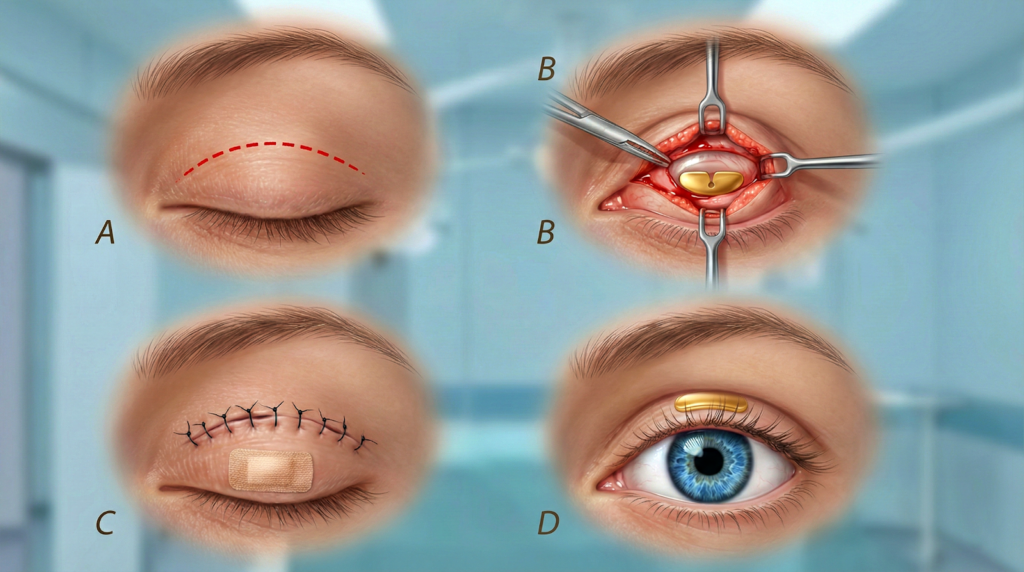
The process for gold weight implantation will begin with the selection of the most fitting weight for the patient’s eye. Dr. Azizzadeh will temporarily attach gold eyelid weights of different sizes and weights to the patient’s lid to find the one that produces the most natural eyelid closure. This trial process, known as weight titration, ensures the selected weight provides complete closure without causing excessive drooping or an unnatural appearance. Once the proper weight is determined, Dr. Azizzadeh and his team of highly specialized experts will proceed with the eyelid gold weight placement in the upper eyelid. The most commonly used procedure for implanting these weights involves incising the upper eyelid crease and cutting through the muscle in order to expose the area where the gold weight is anchored directly with sutures. The weight will then use the power of gravity to close the eyelid and allow the patient to blink once again.
Although eyelid gold weight placement may be clinically beneficial for many patients, this procedure alone may be inadequate in some with facial paralysis or Bell’s palsy. Clinical studies on treating lagophthalmos with eyelid weights emphasize the importance of addressing both upper and lower eyelid positioning for optimal results. Thus, lower eyelid reconstruction is often needed as well to achieve optimal results and to reduce long-term complications in patients receiving gold weight placement.
Benefits of Gold Eyelid Weights
The benefits of gold weight eyelid procedure for facial paralysis patients include:
- Improved blinking
- Improved eyelid closure
- Enhanced protection for the surface of the eye
- Relief of dry eye symptoms
- Reversible procedure if facial nerve function returns
- Minimal downtime with quick recovery
Dr. Azizzadeh is happy to teach facial paralysis patients about eyelid gold weight placement, how they work, and what their benefits are. By doing so, Dr. Azizzadeh helps patients determine if this treatment can help them achieve their desired results. For more comprehensive information about facial paralysis eye protection options, patients can explore various interventions that work in conjunction with weight implantation.
Am I A Candidate For Eyelid Gold Weights?
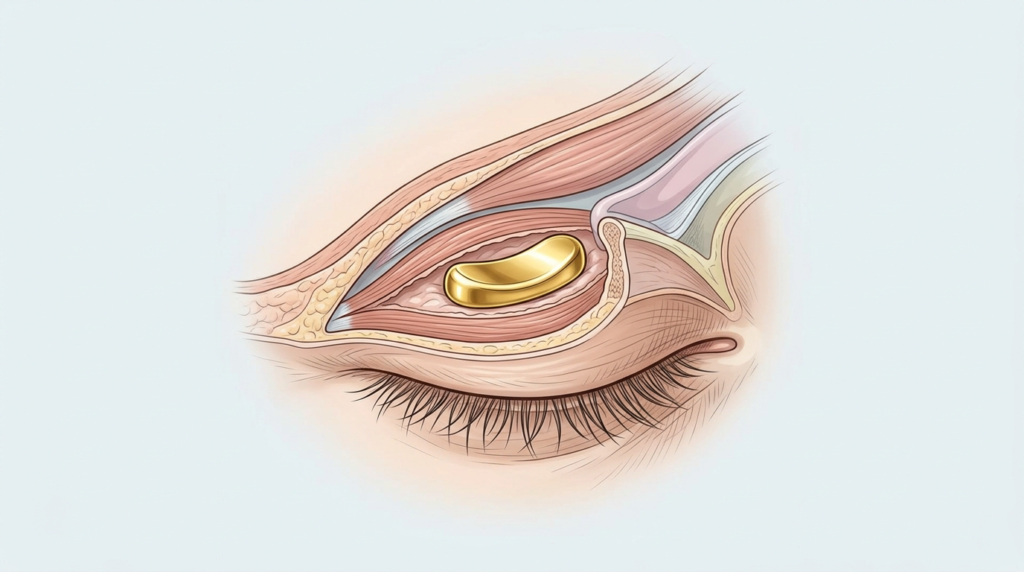
Gold eyelid weights are safe and effective and have been shown to help facial paralysis patients restore the eyelid function. A good candidate for this particular treatment is a patient suffering from some form of facial paralysis that is inhibiting natural eyelid closure. Ideal candidates typically have paralysis lasting longer than six months with no signs of spontaneous recovery, adequate eyelid tissue quality, and realistic expectations about outcomes. There are a couple of other options available as well, such as eyelid gold weight, platinum weights and eyelid springs, and the best treatment option for a patient’s specific case will be carefully considered by the team at the Facial Paralysis Institute. If an individual is struggling with the side effects of not being able to blink or close, a common solution is the gold weight eyelid procedure. This minimally invasive, natural-looking procedure is an effective way to improve eyelid function and appearance.
If you’re experiencing symptoms of incomplete eye closure or facial paralysis affecting your eyelid function, schedule your personalized consultation with Dr. Azizzadeh to discuss whether gold eyelid weights are right for you.
What to Expect During a Gold Eyelid Weights Consultation

Gold eyelid weight placement is an advanced facial paralysis treatment, and Dr. Azizzadeh requires a patient consultation to determine if it is the proper treatment. During a consultation, Dr. Azizzadeh learns about a patient and his or her facial and eyelid paralysis symptoms. He also performs various tests to assess a patient’s condition so he can provide the best-possible treatment recommendations. The evaluation typically includes measurement of the degree of lagophthalmos (the gap between eyelids when attempting to close), assessment of corneal sensitivity, examination of tear production, and evaluation of lower eyelid position and tone.
If Dr. Azizzadeh determines that a patient is a viable candidate, he will outline all aspects of the treatment. He will explain what a patient should expect during a gold eyelid weights placement procedure, as well as recovery following treatment. Additionally, Dr. Azizzadeh allocates time and resources to respond to a patient’s eyelid weights treatment concerns and questions. Dr. Azizzadeh strives to ensure a patient is comfortable with a gold eyelid weights procedure. As such, Dr. Azizzadeh will do whatever he can to help a patient make an informed treatment decision.
Dr. Babak Azizzadeh brings decades of specialized experience in facial paralysis reconstruction to every consultation. His meticulous approach to patient evaluation ensures that each treatment plan is tailored to the individual’s specific anatomy, severity of paralysis, and personal goals for both function and appearance.
Why Trust the Facial Paralysis Institute?
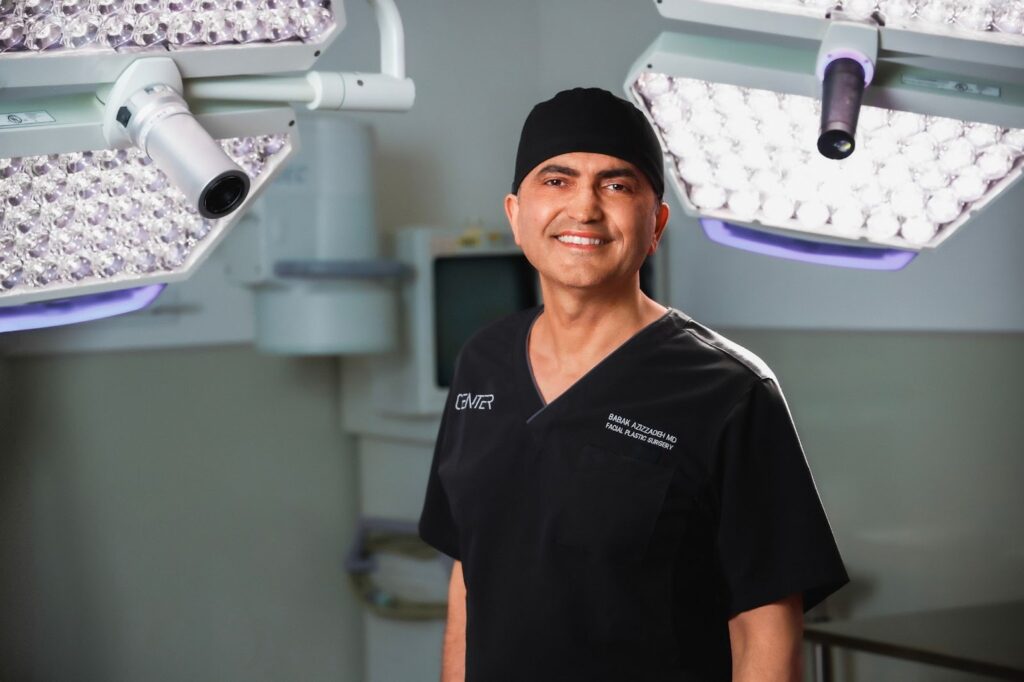
The doctors at the Facial Paralysis Institute are experts in their field and believe that a multidisciplinary approach to facial palsy treatment ensures the best results. When performing eyelid surgeries, Dr. Azizzadeh works closely with oculoplastic surgeon Guy Massry, MD in order to effectively treat impaired eyelid function caused by facial paralysis.
Babak Azizzadeh, MD, FACS is a board-certified facial plastic surgeon, trained at Harvard, whose expertise in facial paralysis makes him one of the most highly regarded facial plastic surgeons in the country. In addition to being featured in various media outlets like Discovery Health, The New York Times, and the Oprah Winfrey Show, Dr. Azizzadeh is actively involved in research as well as teaching medical students at UCLA, where he imparts his specialized knowledge on various aspects of facial paralysis, including eyelid gold weight placement.
Guy Massry, MD is an oculoplastic surgeon specializing in cosmetic surgery of the eyelids, including the gold weight eyelid procedure. Known as “Dr. Fix-It,” Dr. Massry is a graduate of the USC School of Medicine and is highly regarded among his peers for his work and research in the field of oculoplastic surgery.
Together, Dr. Azizzadeh and Dr. Massry collaborate to give their facial paralysis patients the best possible result when it comes to restoring eyelid function.
Gold Eyelid Weights FAQ’s
Q: What is the recovery like after gold eyelid weight implantation?
A: The procedure is typically performed on an outpatient basis, meaning the patient can return home the very same day. From start to finish, the entire eyelid gold weight placement procedure takes roughly 20 to 30 minutes. The patient is usually able to close their eye immediately following implantation and the function improves with time. Some swelling and/or bruising of the treatment area is common after surgery but will heal in the coming weeks.
Q: Will the gold weight be visible once it’s implanted?
A: The procedure is typically performed on an outpatient basis, meaning the patient can return home the very same day. From start to finish, the entire eyelid gold weight placement procedure takes roughly 20 to 30 minutes. Most patients experience immediate improvement in eyelid closure right after surgery, though optimal function develops gradually as swelling subsides. The patient is usually able to close their eye immediately following implantation and the function improves with time. Some swelling and/or bruising of the treatment area is common after surgery but will heal in the coming weeks. Patients can typically resume normal activities within a few days, though strenuous exercise should be avoided for about two weeks.
Q: Why are the weights made of gold?
A: The use of gold in eyelid gold weight replacement makes this type of implant safe for use in MRI scans, which is important as patients with facial palsy may need to be able to have imaging done as their condition is monitored. It is also unusual for gold to irritate a patient’s skin, making it a good choice for use on the delicate skin of the eyelid. Gold’s biocompatibility, malleability for precise shaping, and non-magnetic properties make it the ideal material for this delicate application.
Q: How much do gold eyelid weights weigh?
A: Although gold eyelid weights are constructed from a strong, heavy metal, they are lightweight and won’t interfere with the eye or eyelid. Generally, gold eyelid weights weigh between 1.0 and 1.5 grams, or about the same weight as a jellybean. The specific weight is carefully selected during the consultation based on the patient’s lid anatomy, degree of weakness, and desired outcome.
Q. Does eyelid gold weight placement require anesthesia?
A: Local anesthesia may be given to a patient prior to a gold weight implant eyelid procedure. If a patient feels anxious about the surgery, a light sedative may be given to help ease the nerves and help the patient relax throughout the gold weight eyelid procedure.
Q. Is a gold weight eyelid procedure painful?
A: Dr. Azizzadeh takes steps to help minimize pain and reduce the risk of complications during a gold weight eyelid placement procedure. He offers full details about what a patient should expect during the procedure before it is performed. Dr. Azizzadeh also offers tips to help a patient prepare for gold weight implant surgery, as well as provides recommendations to help a patient fully recover after treatment.
Q. Is eyelid weights surgery the best treatment for incomplete eye closure?
A: The best treatment for incomplete eye closure varies from person to person. To determine how to best treat incomplete eye closure, Dr. Azizzadeh requests a patient consultation for eyelid gold weight placement. This allows Dr. Azizzadeh to examine a patient and his or her incomplete eye closure. Then, Dr. Azizzadeh offers a personalized treatment plan to his patient, which may include eyelid weights, platinum chains, or eyelid springs.
Q. Which is a better option to treat incomplete eye closure: gold eyelid weights or platinum chains?
A: For those who are exploring treatment for incomplete eye closure, platinum chains sometimes provide a viable alternative to gold eyelid weights. The chains consist of platinum, a high-density metal, and are slightly less visible than gold eyelid weights. Platinum chains also deliver results similar to those associated with gold eyelid weights placement. To determine if a patient should receive gold eyelid weights placement or platinum chains for incomplete eye closure, it is paramount to get an assessment from Dr. Azizzadeh. This assessment ensures that a patient can learn about all available treatment options, including the highly effective gold weight eyelid procedure for incomplete eye closure.
Q. Which is a better option to treat incomplete eye closure: gold eyelid weights or eyelid springs?
A: Eyelid springs are metal springs that can be surgically implanted into the eyelid to help restore the eyelid function. In certain instances, eyelid springs are a better option than gold eyelid weights placement to treat incomplete eye closure. To find out, a patient must undergo an assessment performed by Dr. Azizzadeh. This ensures that a patient can receive insights into the severity of his or her incomplete eye closure, along with a personalized treatment recommendation from Dr. Azizzadeh.
Q: What are the dangers of not having complete eye closure?
A: Closing our eyes allows us to protect them from foreign objects entering and causing damage. Our eyes also lubricate themselves naturally through the blinking process, and not being able to blink can cause the eyes to become painfully dry. It is important to seek treatment for incomplete eye closure to prevent permanent damage and pain. One potential solution is eyelid gold weight placement, a surgical procedure in which a small gold weight is stitched into the upper eyelid to help it fully close.
Q: Are there other treatments available to treat inadequate eyelid closure?
A: There are a number of different treatment options available to help restore eyelid function in patients with facial paralysis, and Dr. Azizzadeh will determine the best course of action during your consultation. Aside from gold weight eyelid procedure, platinum chains and eyelid springs are two of the most commonly performed procedures that have proven to be highly successful in helping patients with facial paralysis or Bell’s palsy. Another effective technique that is frequently utilized to aid patients with ptosis (drooping eyelids) is eyelid gold weight placement.
.
Why Trust the Facial Paralysis Institute?
The doctors at the Facial Paralysis Institute are experts in their field and believe that a multidisciplinary approach to facial palsy treatment ensures the best results. When performing eyelid surgeries, Dr. Azizzadeh works closely with oculoplastic surgeon Guy Massry, MD in order to effectively treat impaired eyelid function caused by facial paralysis.
Babak Azizzadeh, MD, FACS is a board-certified facial plastic surgeon, trained at Harvard, whose expertise in facial paralysis makes him one of the most highly regarded facial plastic surgeons in the country. In addition to being featured in various media outlets like Discovery Health, The New York Times, and the Oprah Winfrey Show, Dr. Azizzadeh is actively involved in research as well as teaching medical students at UCLA, where he imparts his specialized knowledge on various aspects of facial paralysis, including eyelid gold weight placement.
Guy Massry, MD is an oculoplastic surgeon specializing in cosmetic surgery of the eyelids, including the gold weight eyelid procedure. Known as “Dr. Fix-It,” Dr. Massry is a graduate of the USC School of Medicine and is highly regarded among his peers for his work and research in the field of oculoplastic surgery.
Together, Dr. Azizzadeh and Dr. Massry collaborate to give their facial paralysis patients the best possible result when it comes to restoring eyelid function.
Contact the Expert Team at the Facial Paralysis Institute Today
If you are interested in learning more about eyelid gold weight placement and how they can help you regain the ability to close your eyes, contact facial paralysis expert Babak Azizzadeh, MD, FASC, and the expert oculoplastic surgeons at the Facial Paralysis Institute in Beverly Hills today to schedule a consultation online or by calling (310) 928-9830. There is no need to continue suffering through painful dry eyes and eye damage caused by your facial palsy condition. No matter what eye paralysis causes patients may be dealing with, the experts at the Facial Paralysis Institute are here to help.
Request your consultation with Dr. Azizzadeh today
Call us at (310) 657-2203 to schedule an appointment.
Schedule a Consultation